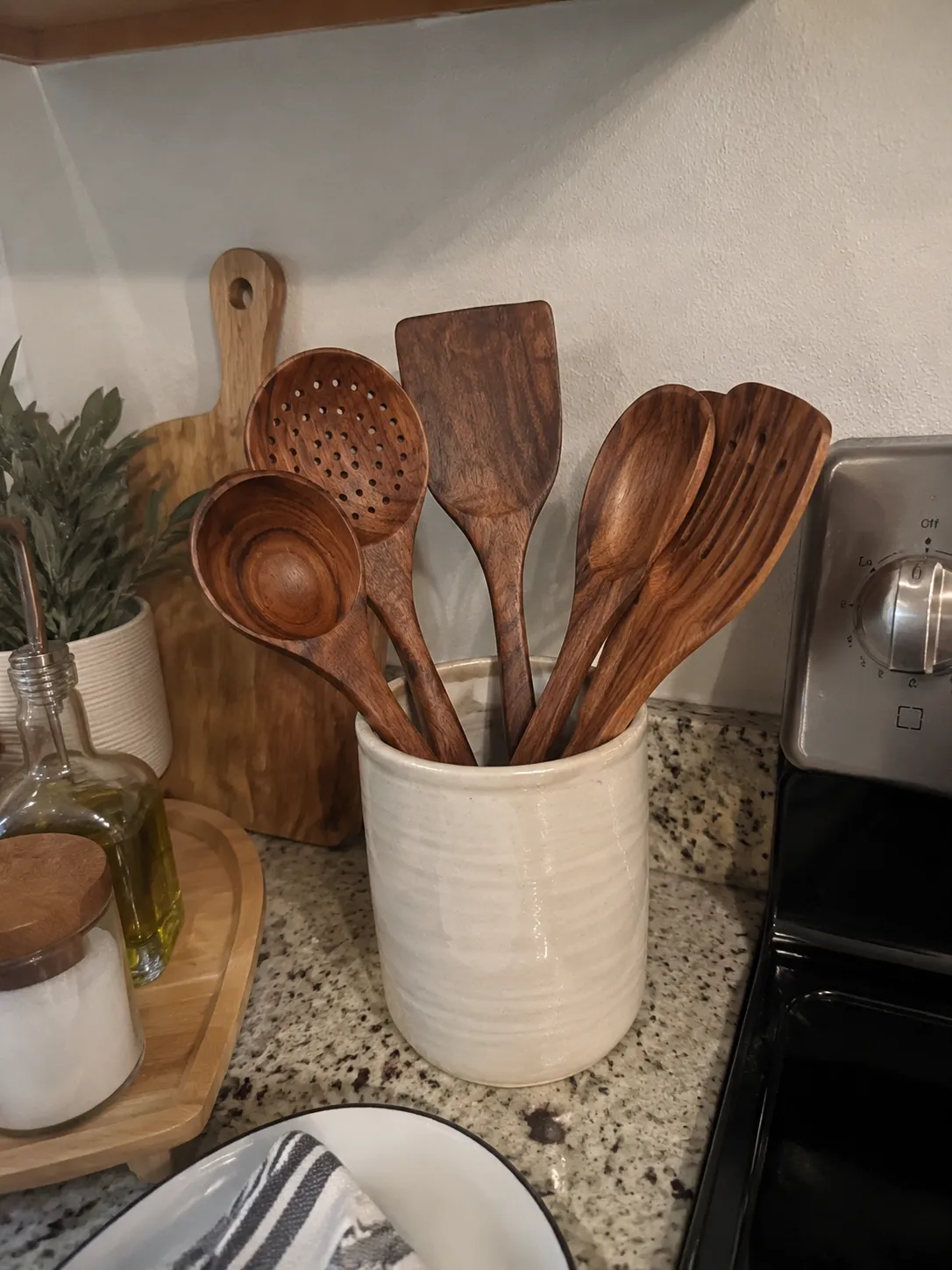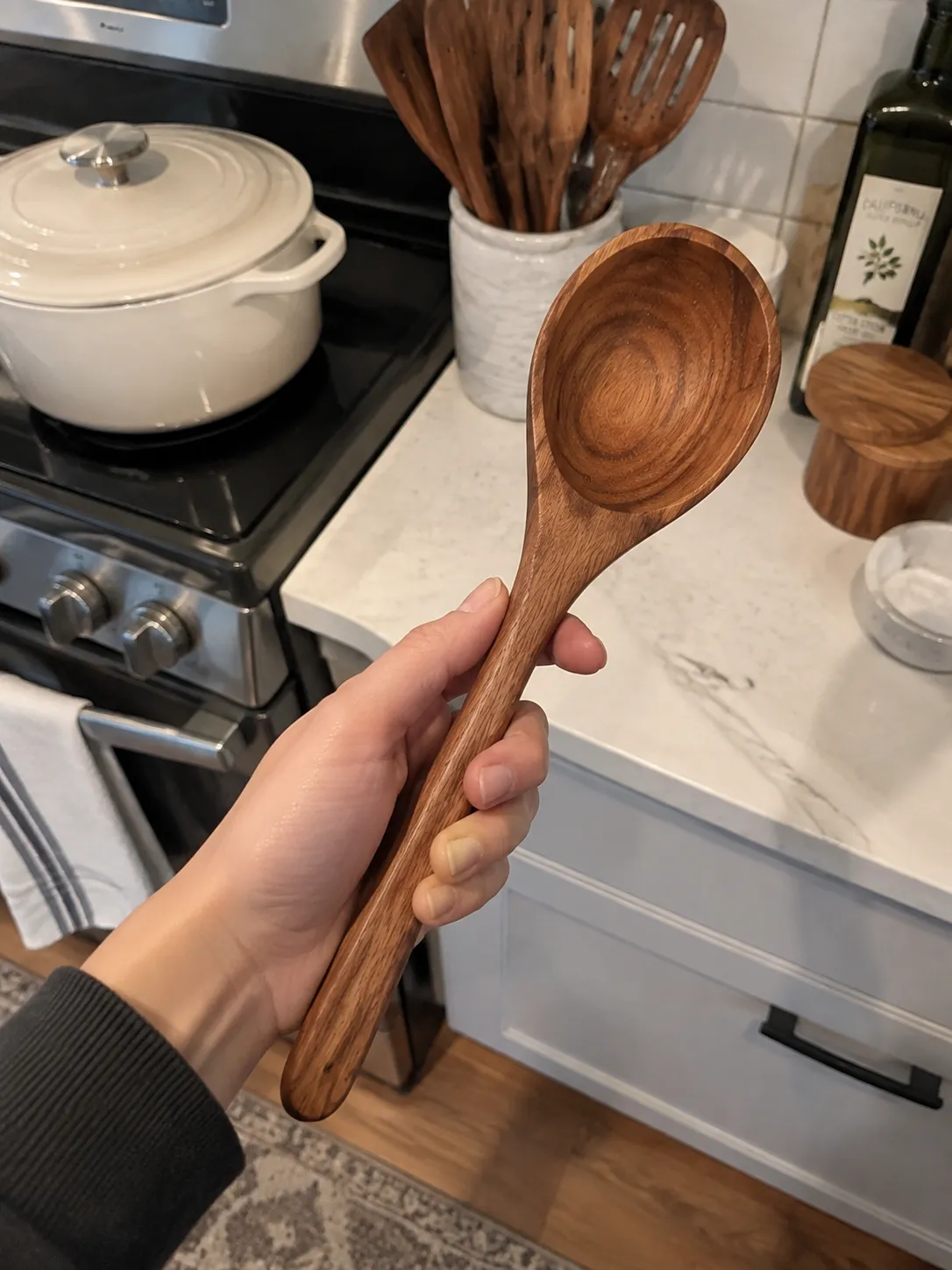
It’s just a spoon.
Does the material really matter?
Heat, wear and everyday food contact deserve a closer look. Explore the research behind plastic cooking tools, then discover how an acacia wood set could fit your kitchen.

In a survey of 1000 home cooks across the United States and Canada, one reason for choosing plastic utensils kept coming up: the price.
It’s an understandable decision. A low-cost spoon does the job, matches the kitchen and seems easy to replace. As household budgets tighten, an inexpensive utensil can feel like a sensible place to save.
But when I look at a utensil through the lens of food-contact materials, the first question isn’t what it costs. It’s what happens when that material meets hot food, repeated stirring and everyday wear.
You may have compared pans, checked ingredient labels and thought carefully about what your family eats. Yet the tool moving through every sauce, soup and weeknight dinner may be the one thing you’ve never questioned.
You chose what goes into dinner. Have you considered what your cooking tools could leave behind?
A shopping survey tells us why people choose a utensil. Material research asks a different question: what can pass from that utensil into food? That’s where the conversation gets more interesting.
The concern isn’t only what you can see.
A plastic spoon doesn’t need to visibly melt for food-contact questions to arise. Researchers examine both chemical migration—small substances moving out of a material—and particle release, where physical fragments enter food. These are different processes, and both deserve attention.
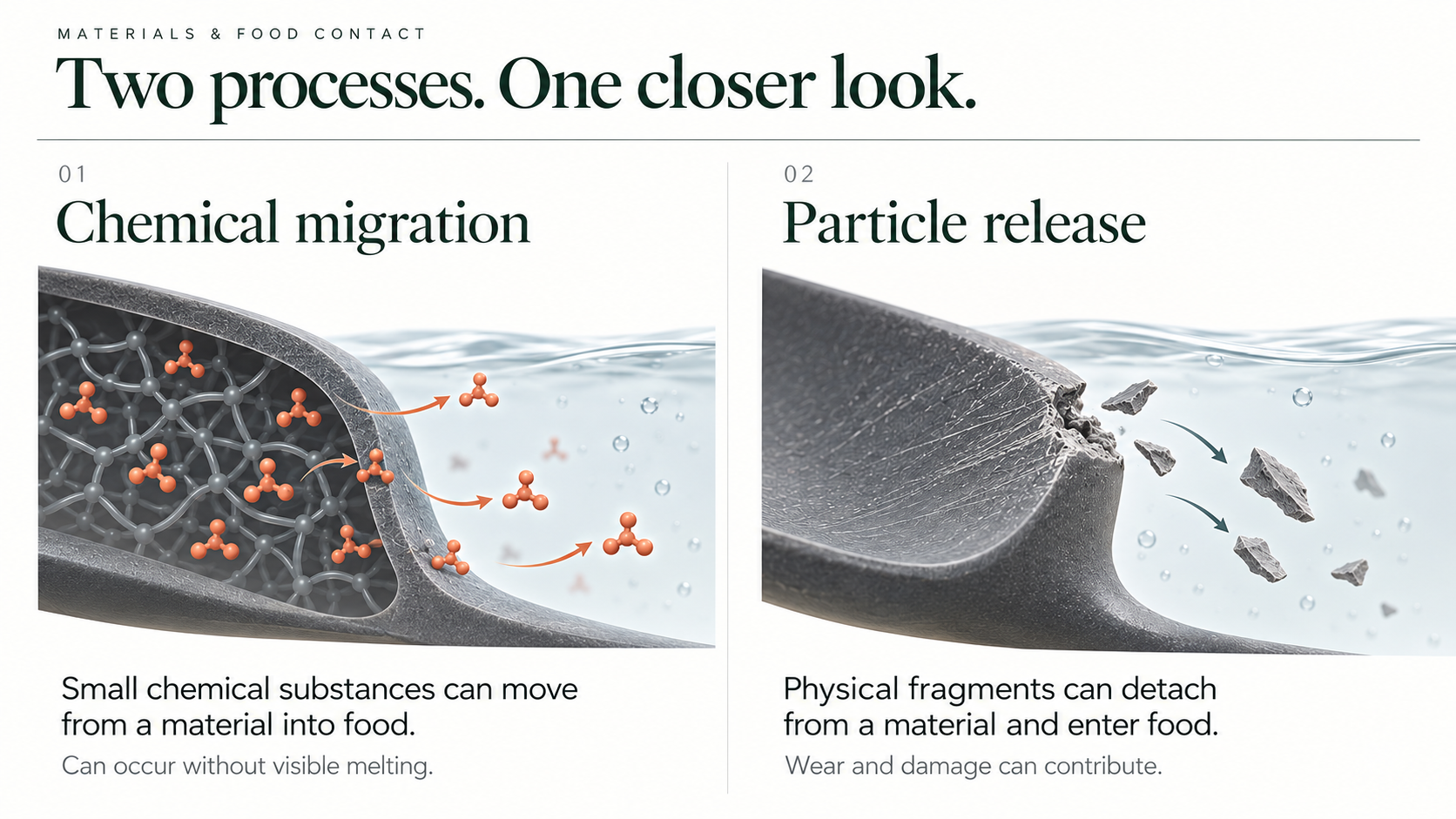
First: substances that can move into hot food.
Germany’s Federal Institute for Risk Assessment (BfR) examined oligomers associated with PA 6 and PA 6,6, two polyamides used in kitchen utensils. These small molecules can remain after manufacture and migrate into food.
In data covering 33 utensils, 10 exceeded the BfR’s toxicologically acceptable group migration value of 5 mg per kilogram of food. Testing used food simulants at 100°C / 212°F for 30 minutes or two hours, depending on the intended use.
The assessment also discussed high-dose animal studies showing liver and thyroid effects from certain evaluated compounds. This is a reminder to pay closer attention to the potential health risks of relevant chemicals in plastic products, and to choose everyday cooking and eating tools thoughtfully.
The BfR recommendation was practical: keep contact between polyamide utensils and hot food as brief as possible, particularly above 70°C / 158°F. That is a reason to reconsider leaving a nylon spoon sitting in a simmering pot.
Source: BfR Opinion 036/2019, summary and migration-testing sections. The reference value is a toxicological assessment value, not a measurement of plastic particles.
“It hasn’t melted” is a visual observation. It doesn’t answer every question about what can move from a material into food.
Second: tiny particles, beyond the visible wear.
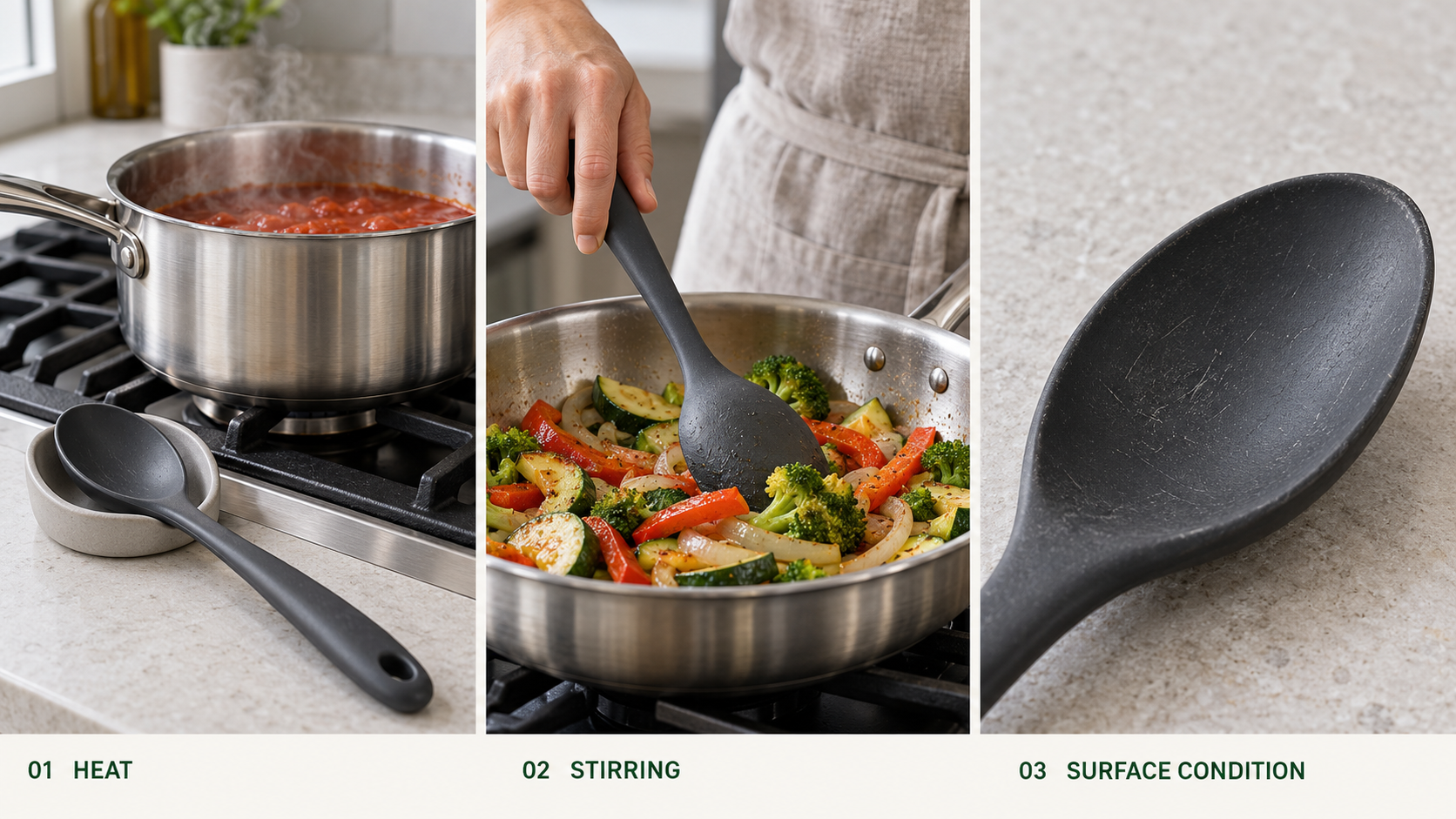
A 2024 study in Science of the Total Environment compared food preparation with non-plastic, new plastic and old plastic cookware. A food simulant went through heating, cooling, mixing, slicing and storage.
Both plastic-cookware groups produced significantly higher microplastic contamination, with the older group showing the highest levels. The authors identified heat and mechanical degradation as plausible contributors to release.
This was a study of a complete preparation process, not an isolated test proving nylon spoons shed particles when heated. It nevertheless puts a familiar kitchen habit in focus: continuing to use worn plastic food-contact tools simply because they still function.
Source: Cole and colleagues, “Microplastic and PTFE contamination of food from cookware” (2024).
Why does this matter for health?
When particles enter food, they can be swallowed with it. The important health questions concern the material, particle size, amount and frequency of exposure. Although current evidence does not establish that microplastic levels detected in foods harm human health, a comprehensive assessment of long-term effects requires continuing scientific research over many years. Some potential health effects, if present, may not become apparent immediately; longer observation and research are needed to understand them more clearly.
For me, the practical question is simpler: where a different tool fits the job, is this a place I want to keep using plastic? You don’t need a dramatic health promise to decide that fewer plastic tools would suit the way you want to cook.
Health context: FDA: Microplastics and Nanoplastics in Foods.
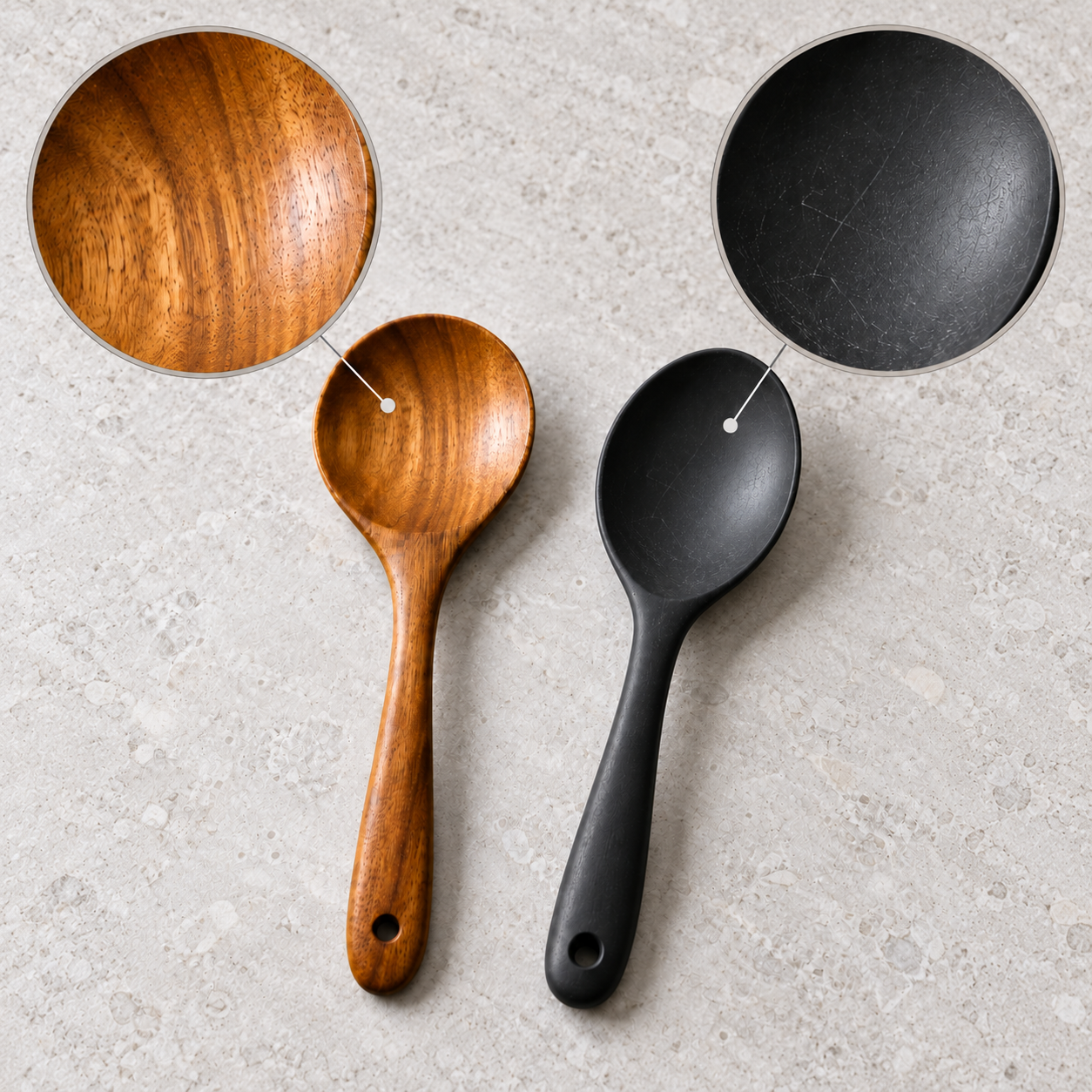
The cheapest tool can become the longest habit.
A utensil bought without much thought can stay in the drawer through hundreds of meals. Familiarity makes it easy to stop noticing its condition.
The next time you stir dinner, take a closer look at the edge, the surface and the material. A small change can begin with the tool already in your hand.
MEET THE ACACIA ALTERNATIVE ↓“Then why not just use metal?”
For plenty of cooking jobs, stainless steel makes sense. It’s sturdy and useful when you need a firm edge or a little more leverage.
Material quality matters before the first stir.
Metal is a broad category, and a polished surface cannot tell you whether an alloy or coating is suitable for food contact. Tools made with unsuitable materials or poorly controlled coatings can create contamination concerns. When suppliers cut corners, the buyer may have little information about what is actually touching the food.
Look for a traceable supplier, clear material information and suitability for the intended cooking task. Food-contact materials should resist corrosion and avoid transferring harmful substances into food; appearance alone is no substitute for those requirements.
Material-selection reference: FDA Food Code, section 4-101.11. These are general selection criteria, not a finding that inexpensive stainless-steel utensils are unsafe.
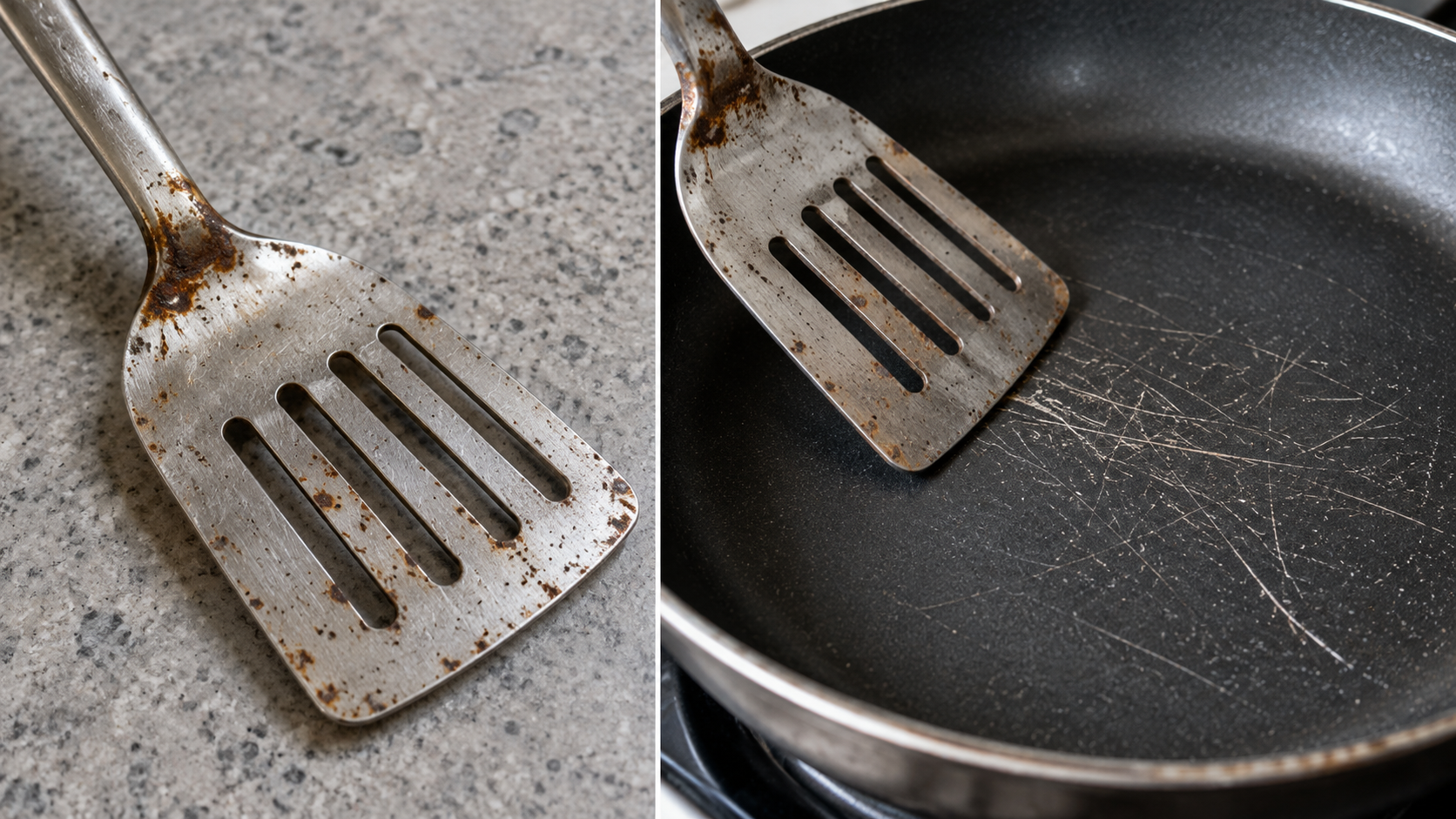
Then there’s your pan.
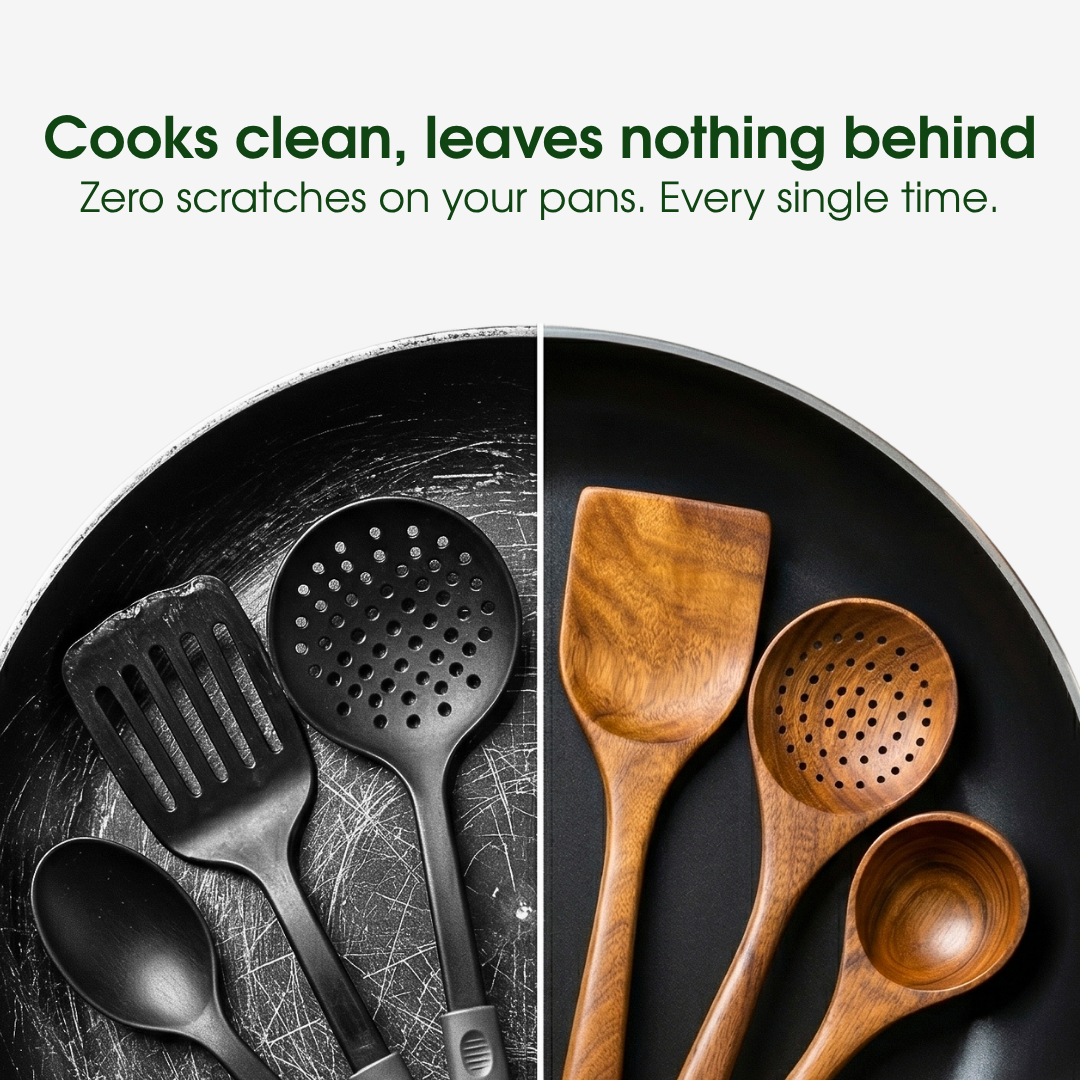
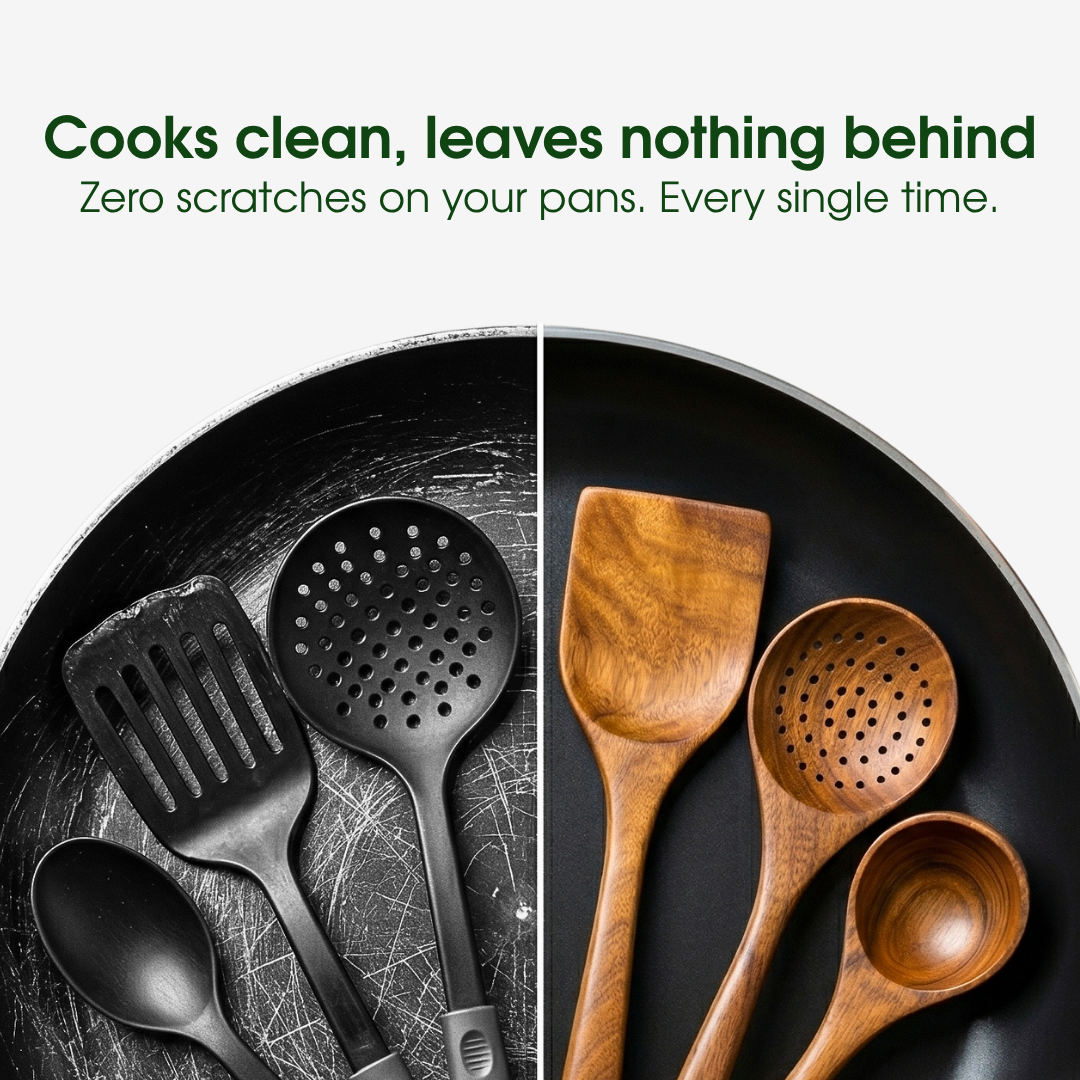
But the best tool also depends on the pan. Metal edges can scratch some nonstick coatings, so check your cookware maker’s instructions before reaching for a steel spoon or spatula.
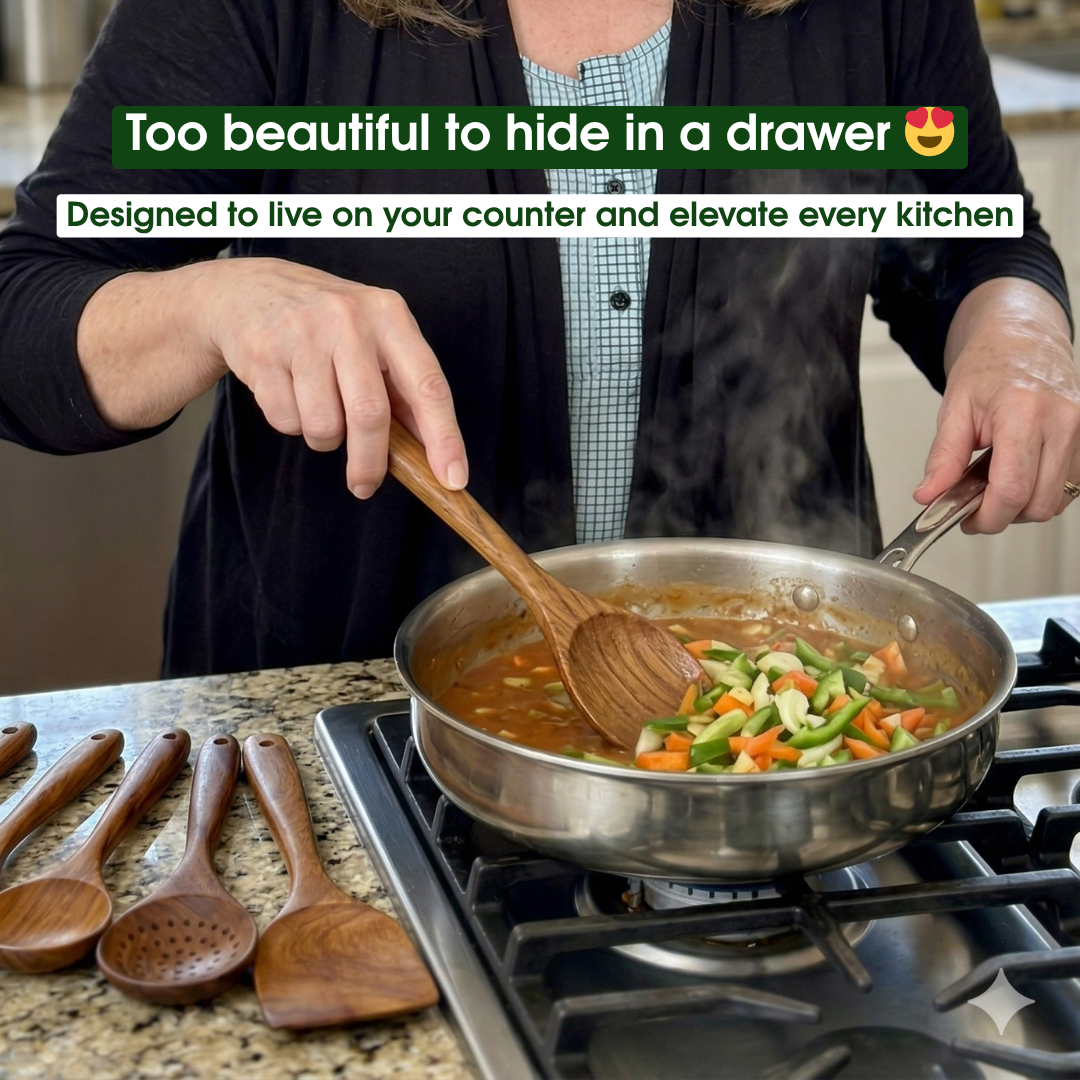
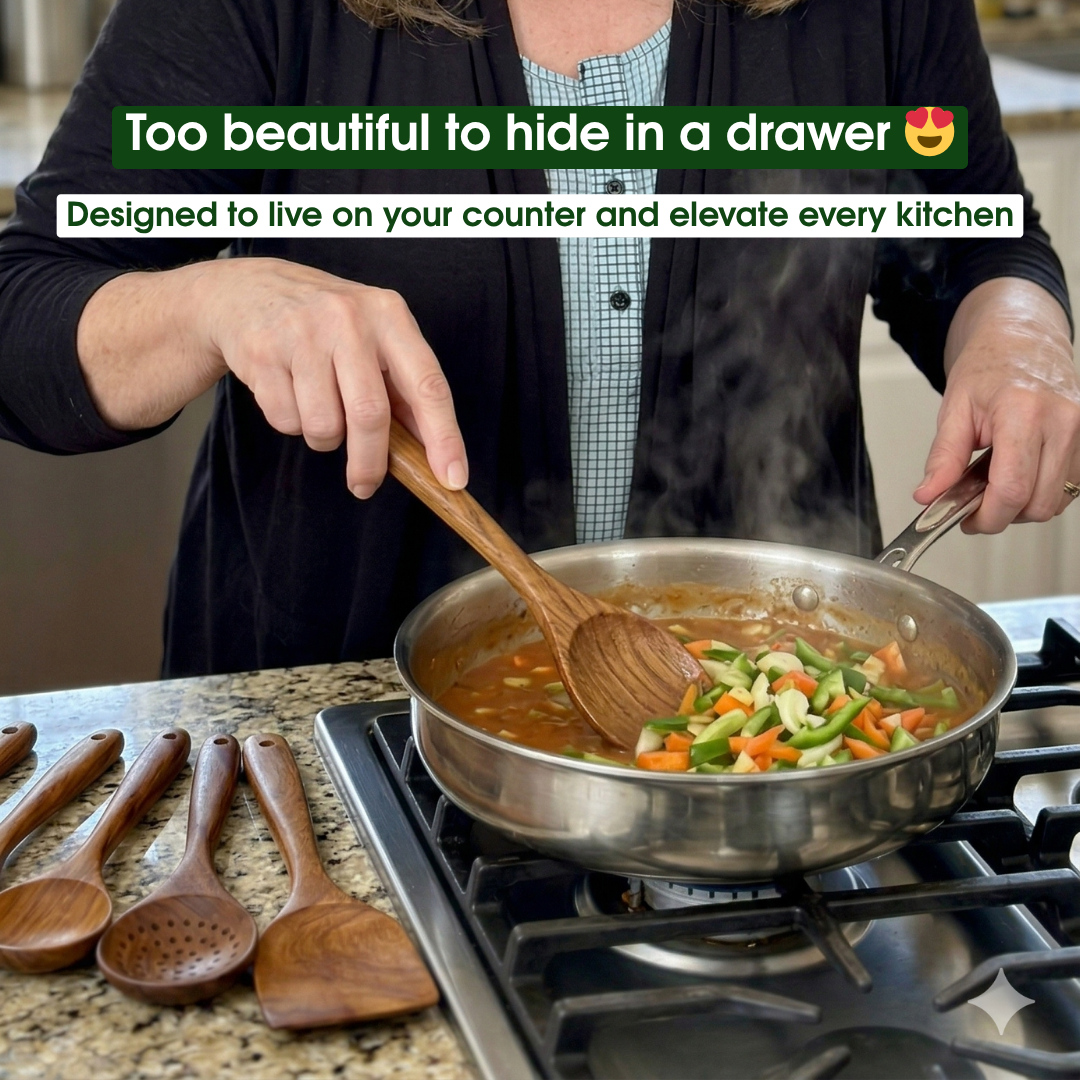
For stirring a sauce or folding vegetables in a coated pan, a smooth wooden utensil can be a practical option. The finish and condition of the tool still matter.
A good utensil should suit the food you cook—and the pan you cook it in.
The FDA Food Code, section 4-101.18, specifies nonscoring or nonscratching tools for kitchenware with certain nonstick coatings. This is general material guidance, not a certification of this product.
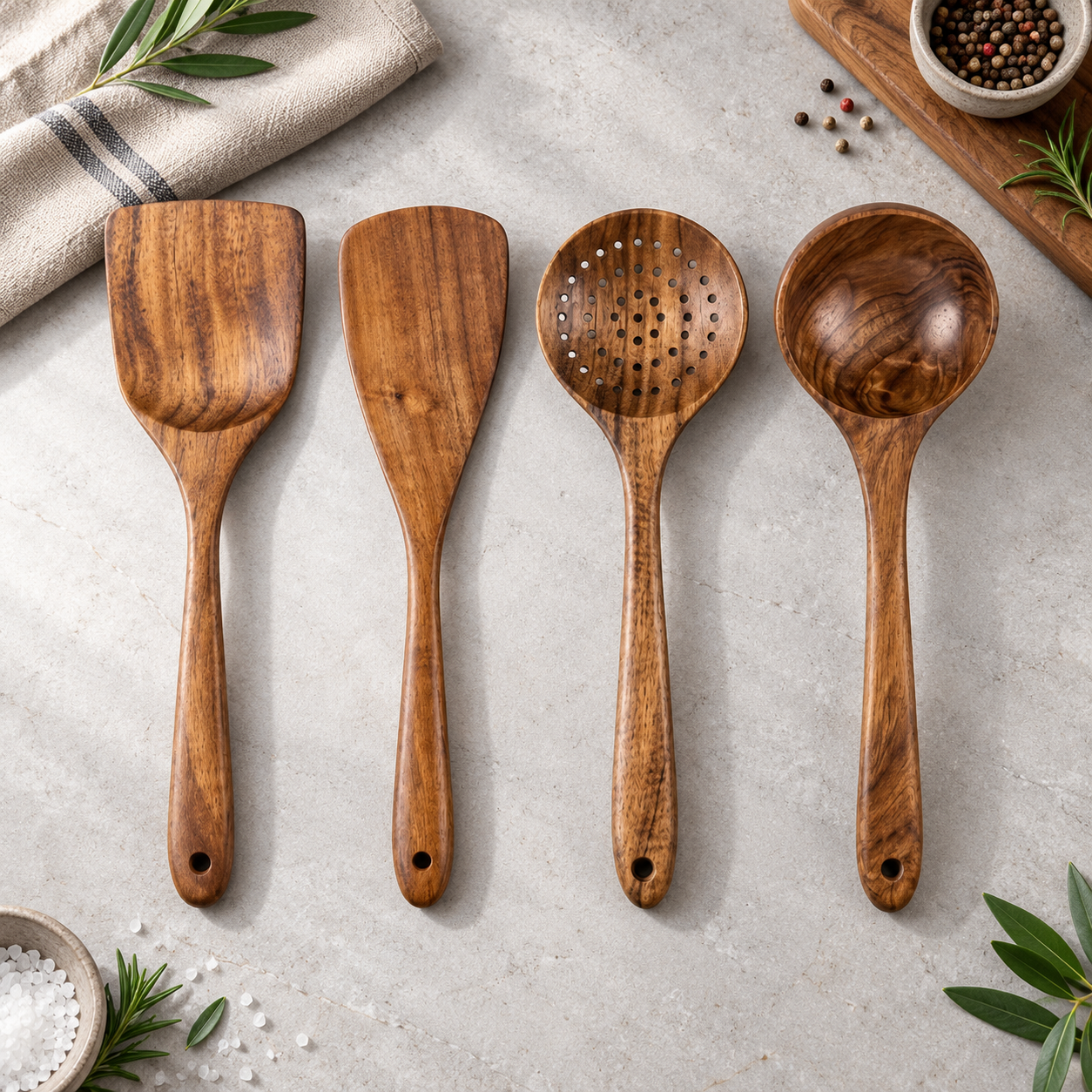
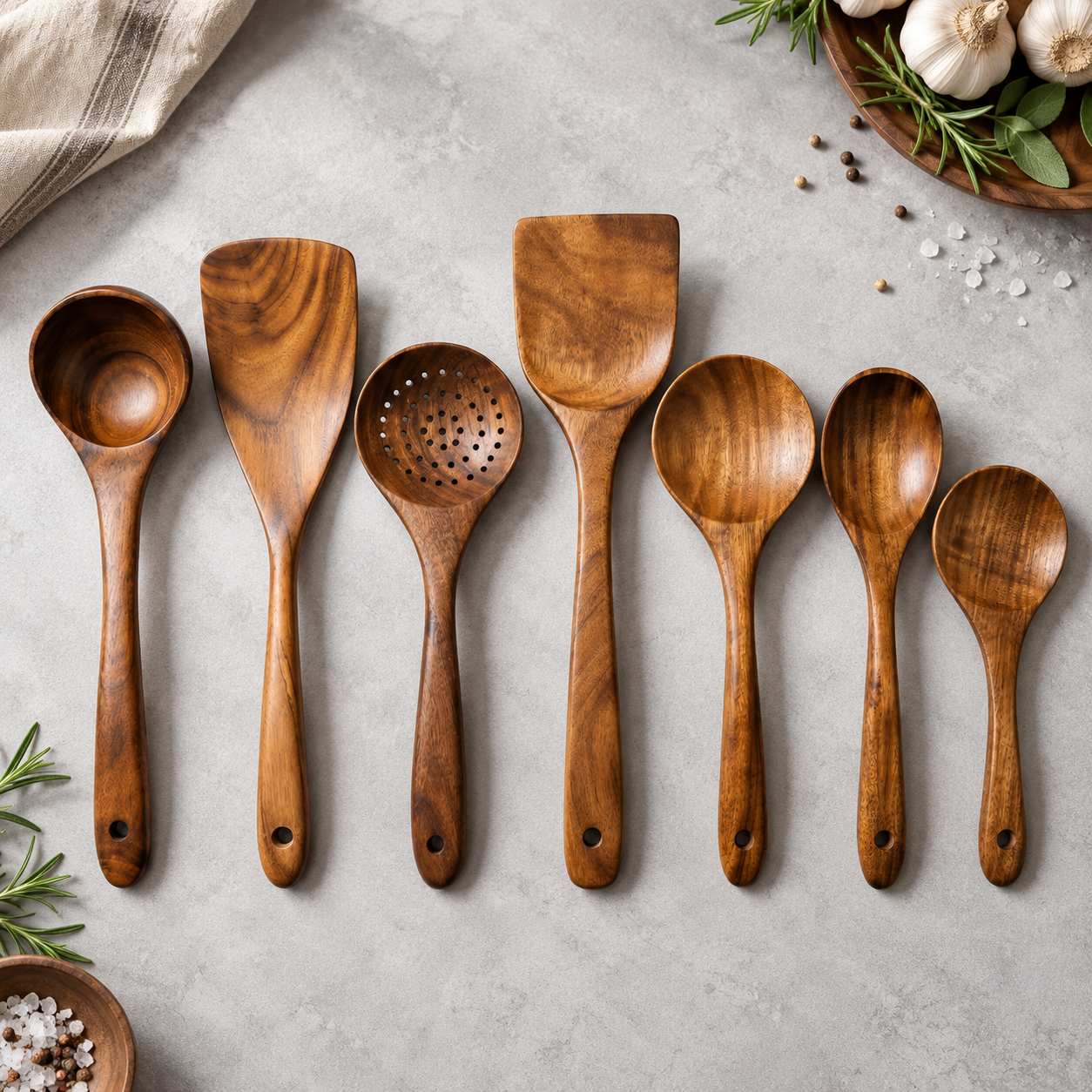
Why choose the Acacia Set?
Compare what you want less of—plastic tools in your cooking routine, hard metal edges around coated pans—with what you want more of: natural texture, a comfortable wooden grip and a coordinated collection.
| What matters | Plastic / nylon | Metal / stainless steel | Victorybuyin Acacia Set |
|---|---|---|---|
| Using fewer plastic tools | Keeps plastic utensils in contact with food during cooking | An alternative to plastic, but without the natural feel of wood | A wooden option for everyday stirring, mixing and serving |
| Gentle stirring in coated pans | Avoid rough, damaged or heat-deformed edges | Hard metal edges can scratch some nonstick coatings | Smooth wooden edges for a gentler stirring option |
| Feel in the hand | A synthetic feel may not suit your preference | Metal handles can conduct heat from hot cookware | A natural wooden grip with a warm, tactile feel |
| Natural kitchen style | Moulded colours and finishes may not match a wood-focused kitchen | A metallic finish may not suit a warm, natural palette | Acacia tones and individual grain patterns worth leaving on display |
| A coordinated everyday collection | Choosing plastic tools doesn’t address a preference for natural materials | Choosing metal tools doesn’t provide the wood texture you’re looking for | Matching acacia tools in 4, 7 and 10-piece collection options |
Ready to replace the plastic?
Start with the tools
you use every night.
You’ve seen why the material matters. Now picture a simpler change: the spoon beside your stove becomes a wooden one you enjoy picking up, using and leaving on display.
The Victorybuyin Acacia Wood Utensil Set brings together warm wood tones and familiar cooking shapes for stirring, mixing and serving. It’s a practical starting point for a kitchen that relies on fewer plastic tools—without giving up a coordinated look.
You don’t need a whole new kitchen. Start with what touches tonight’s dinner.

Why acacia? The beauty is in the wood itself.
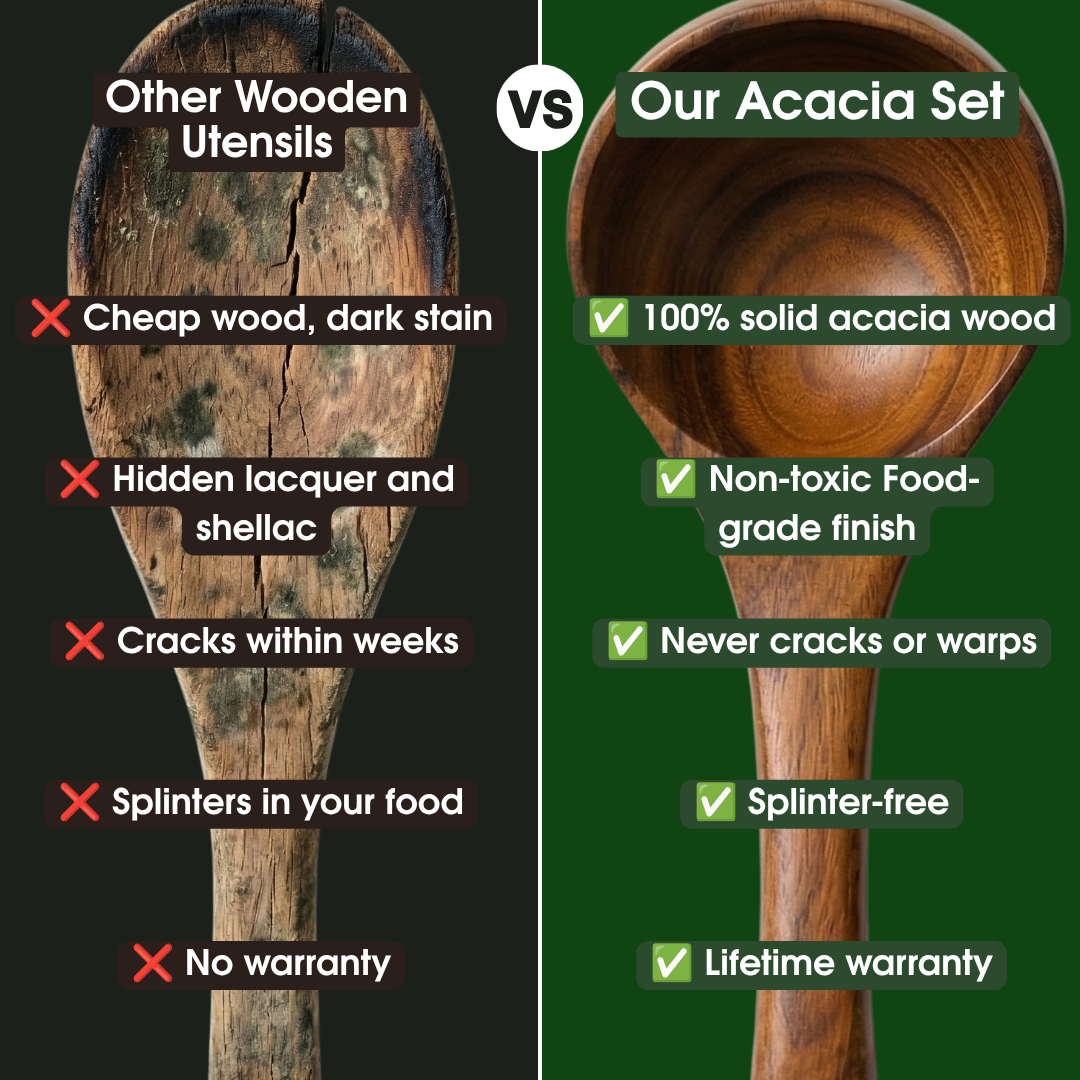
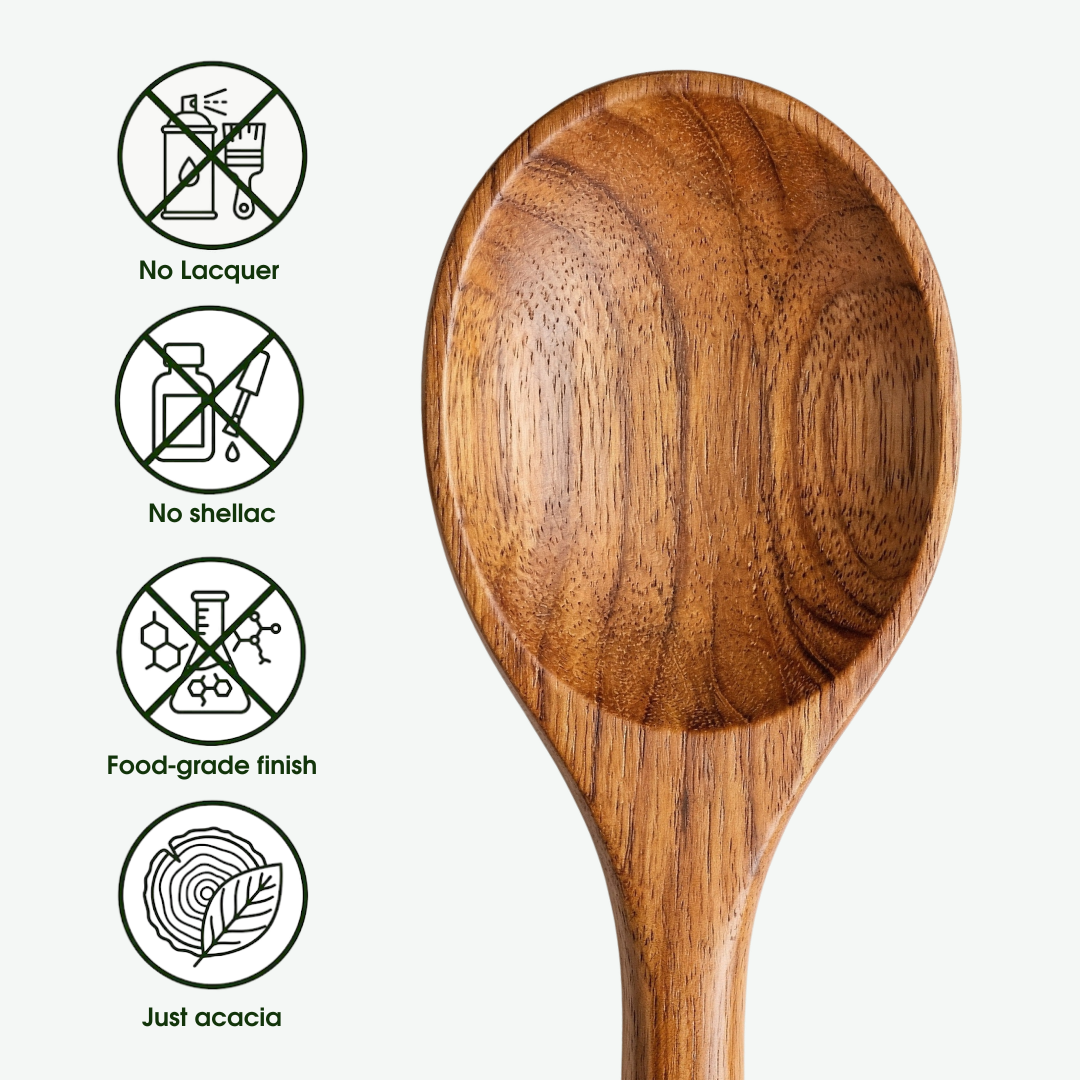
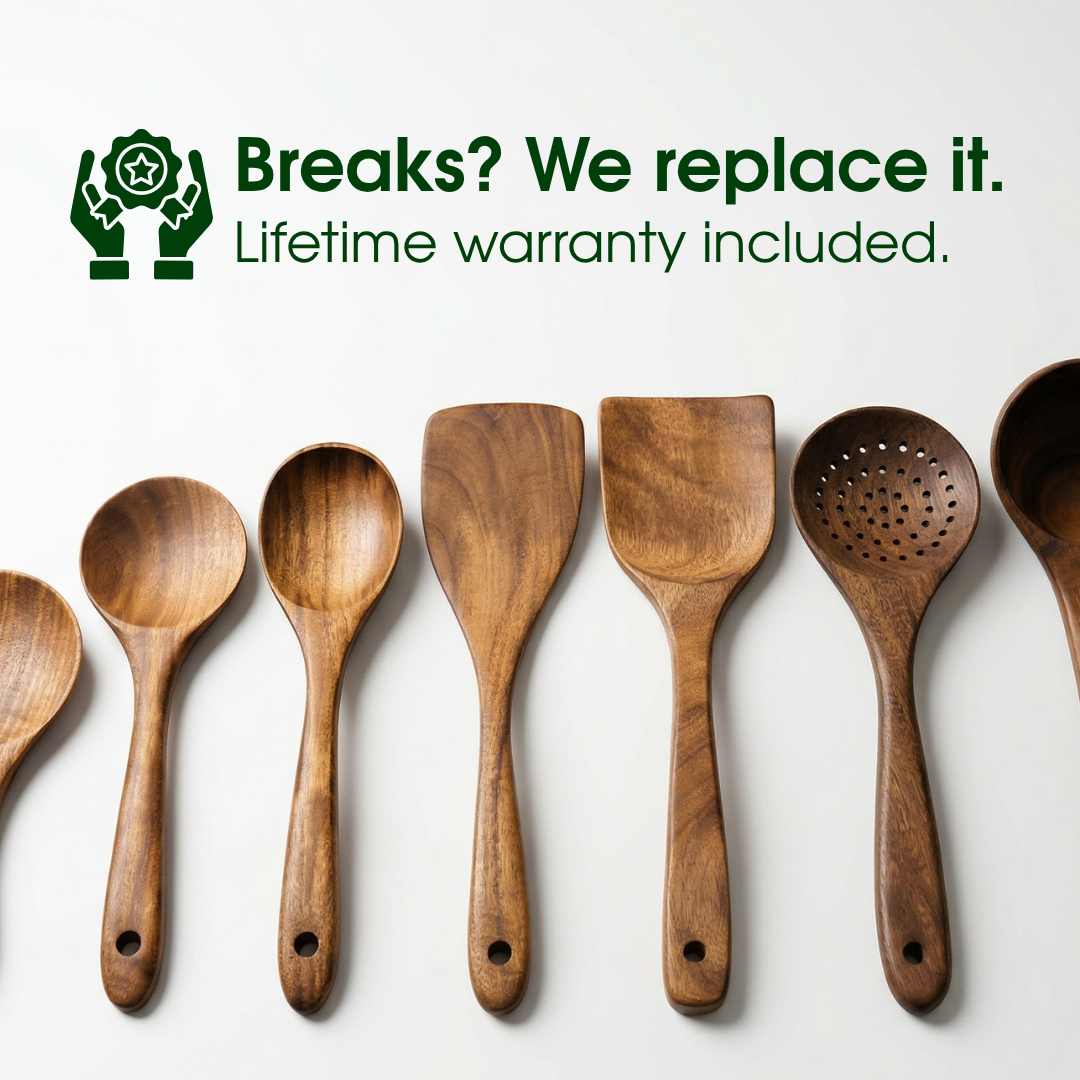
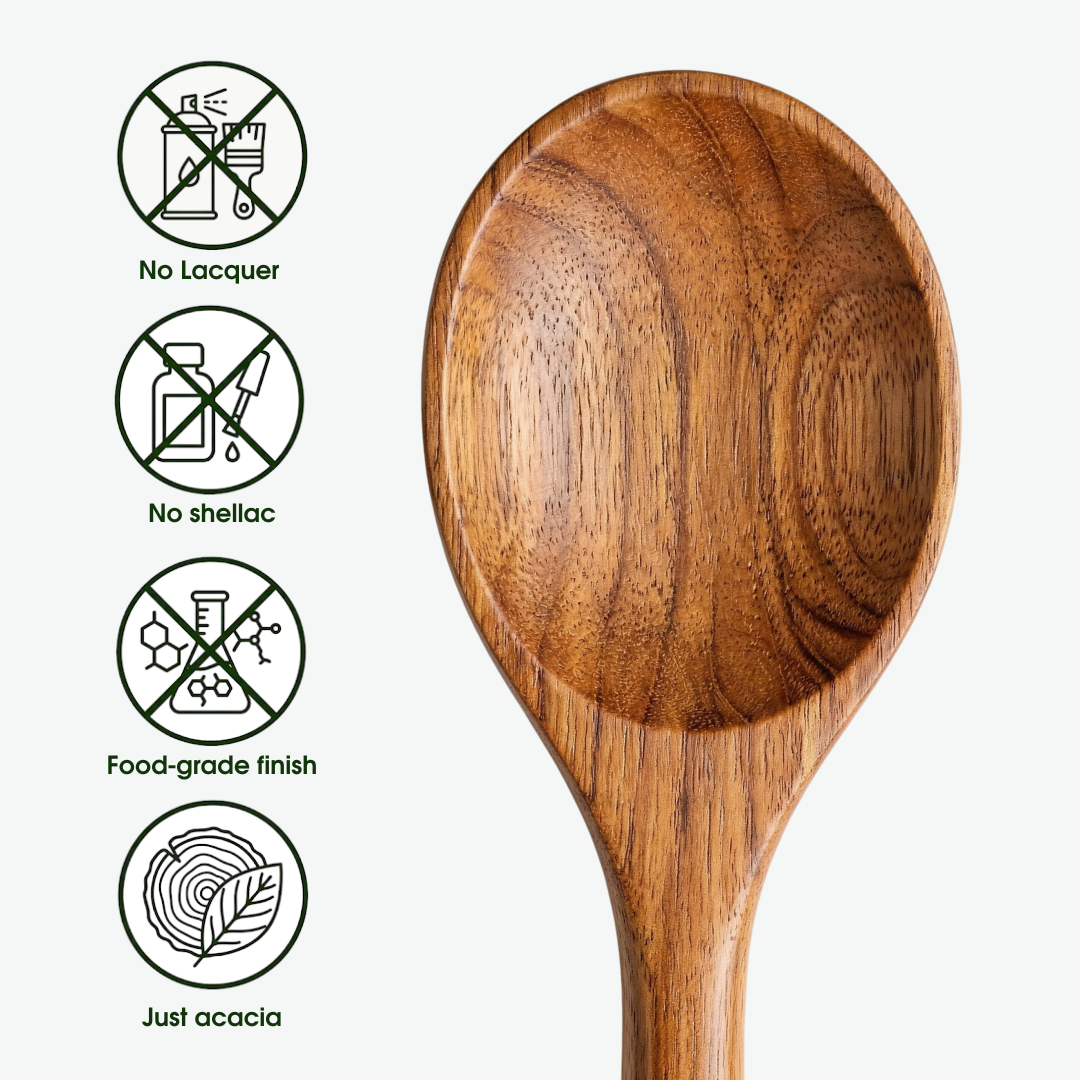
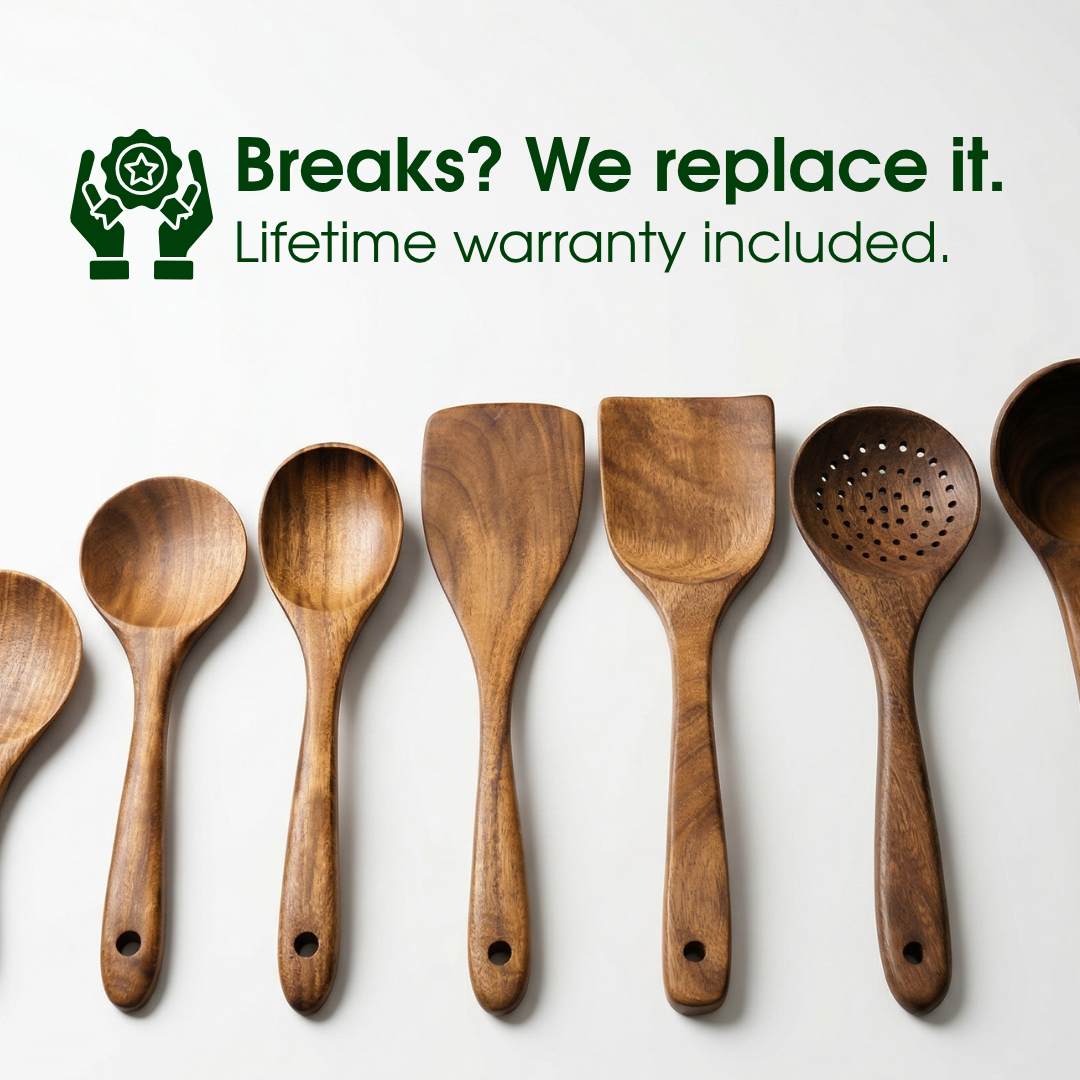
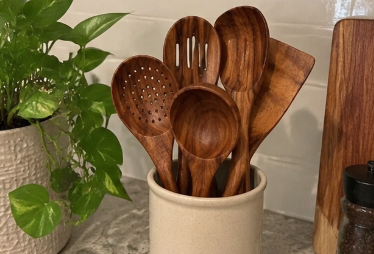
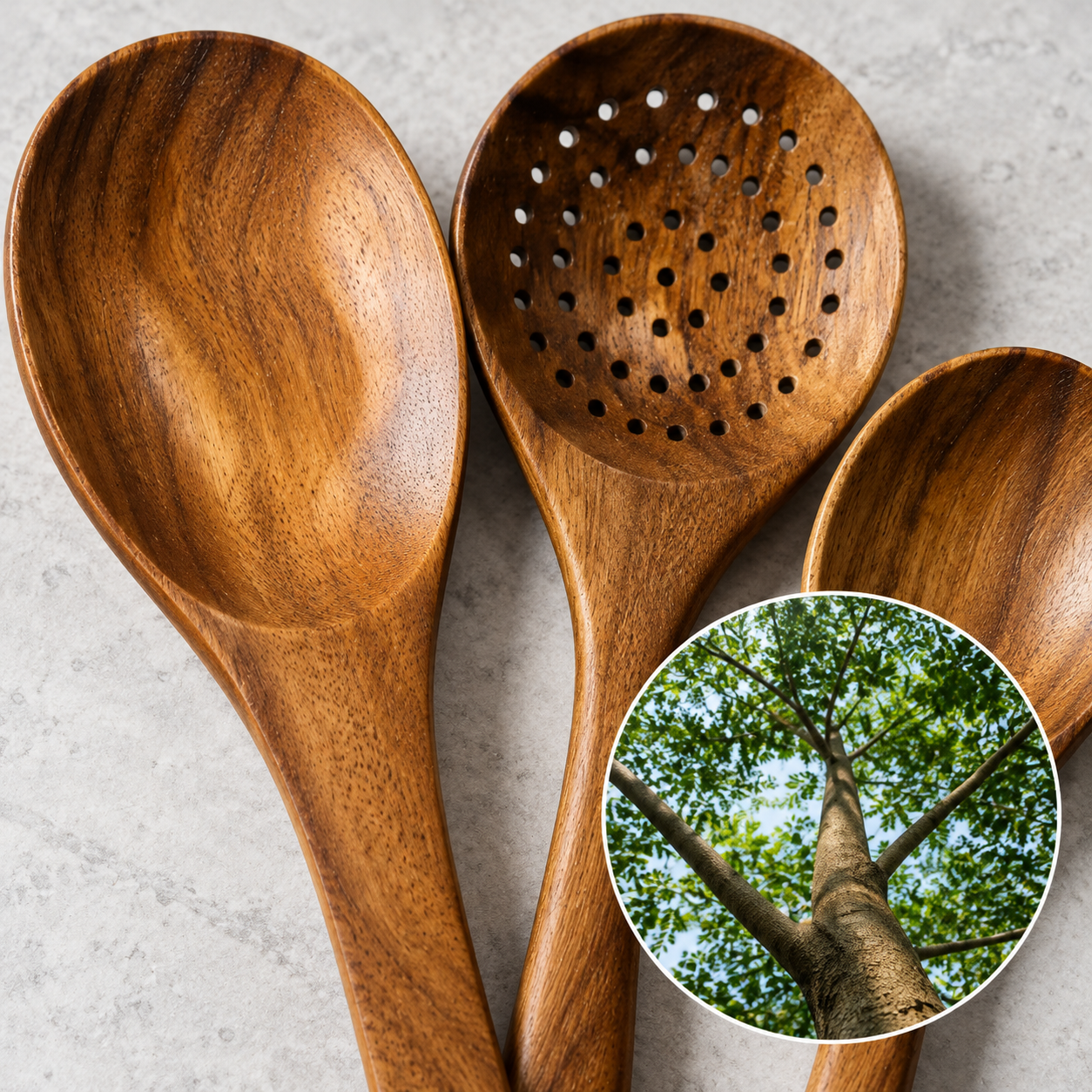
Look closely at the collection and you’ll see the appeal: warm brown tones, visible grain and variations that make the utensils feel individual. The wood is part of the visual character, rather than a printed pattern applied to make every piece look identical.
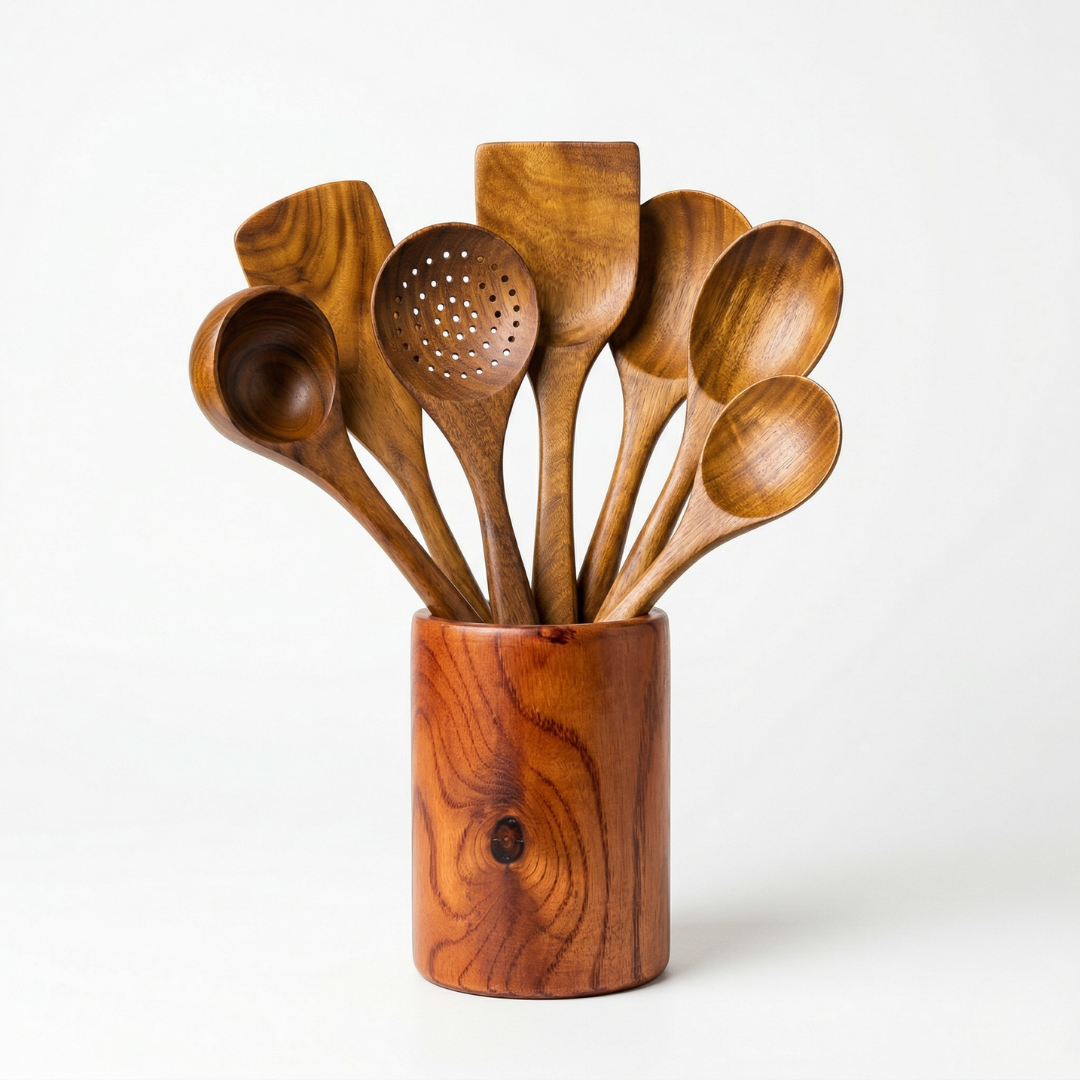
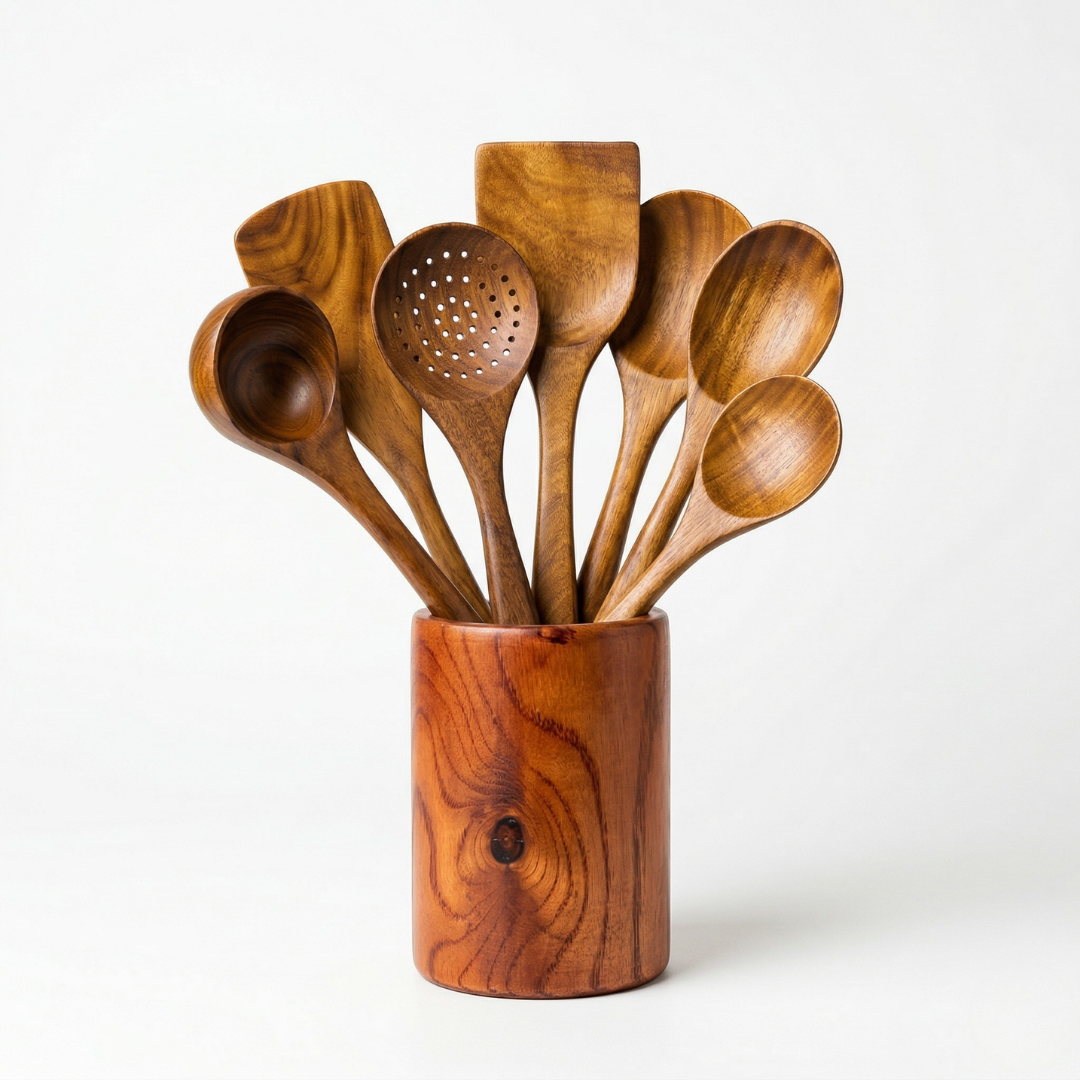
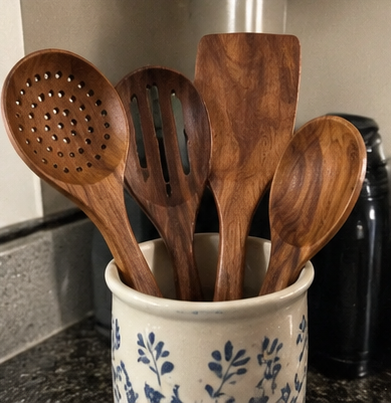
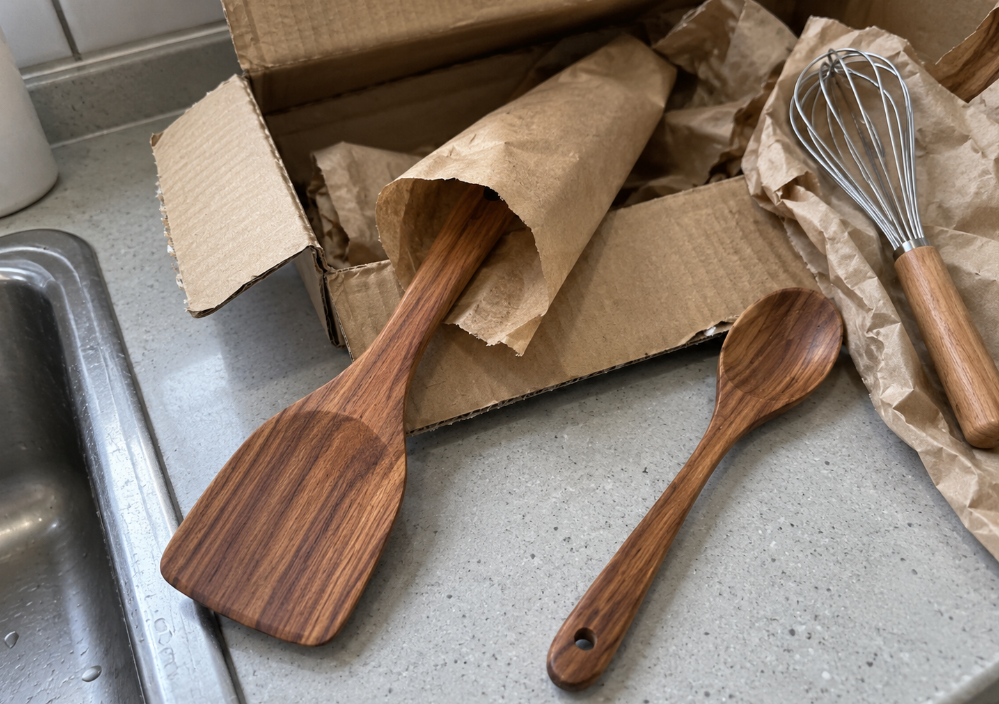
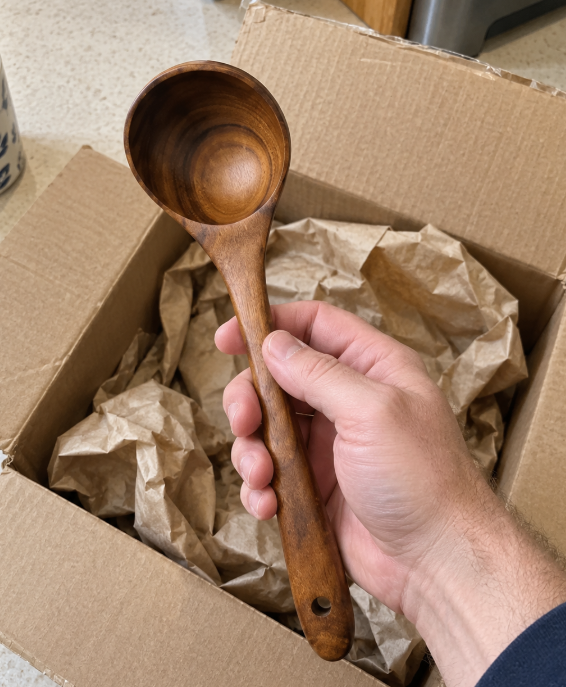
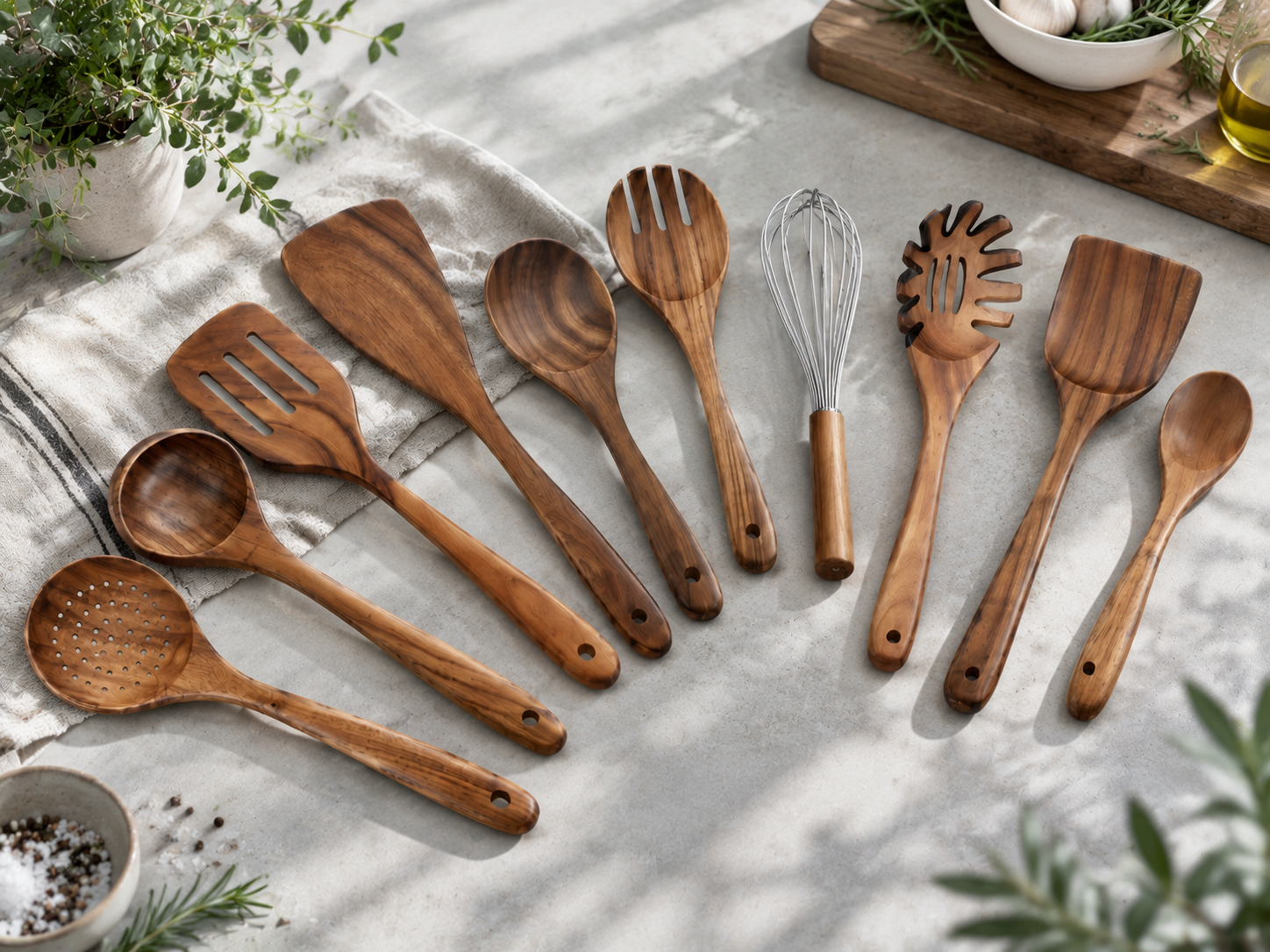
The collection takes that natural appearance and puts it into useful kitchen shapes. Broad turners, rounded spoons and a ladle give the set a place in real dinner preparation, as well as on the countertop.
This is the background to the collection’s appeal: familiar wooden kitchen tools, brought together in a matching acacia set. A natural material, practical shapes and the pleasure of having tools that look like they belong together.

From the first stir to the last serving.
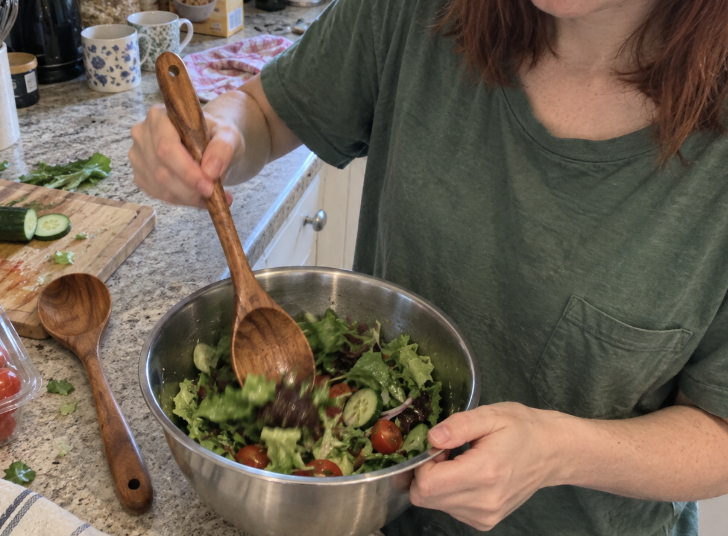
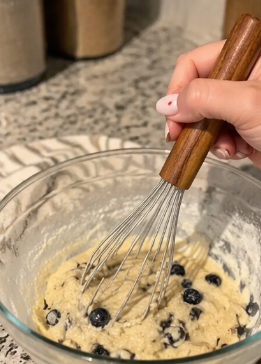
- Stir the sauce. Mix the ingredients.Use a spoon for mixing and stirring tasks suited to wooden tools. Choose the shape that works with the depth and size of your pan.
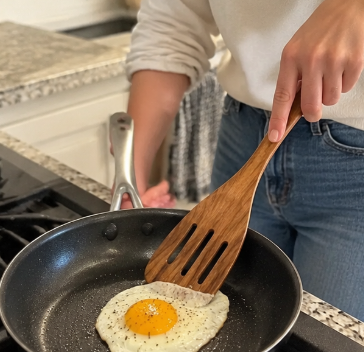
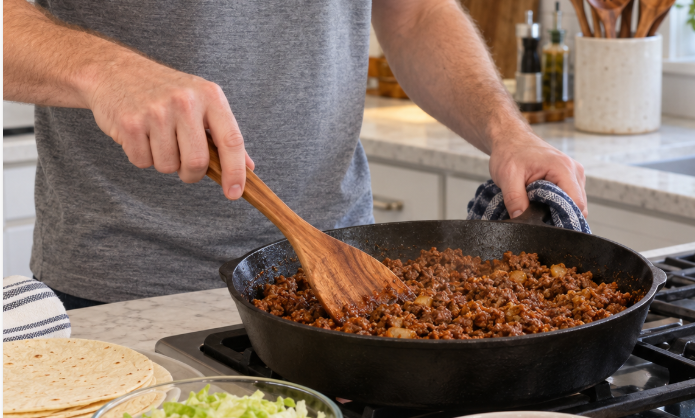
- Turn vegetables. Fold dinner together.Broader tools give you another option for turning and folding. With coated cookware, check compatibility and keep the wooden surface smooth and in good condition.
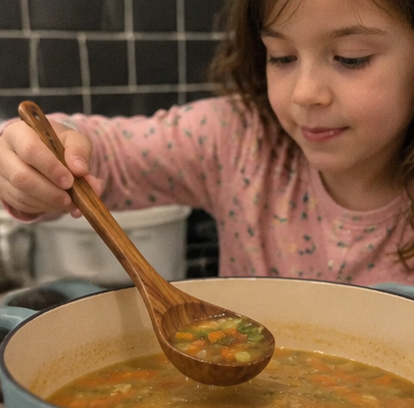
- Bring the set to the table.Serving spoons and a ladle make the collection useful beyond the stove. Choose the set that includes the pieces you need.
- Give the countertop a coordinated look.Matching wood tones turn a collection of everyday tools into part of the kitchen’s style. Natural variations in grain keep the look personal.
A reusable kitchen tool earns its place one meal at a time.
A more thoughtful routine for your family.
When cooking for the people you love, the appeal is practical: fewer plastic utensils in the tasks where wood works well, familiar shapes within reach and a reusable collection you can maintain over time.
For a household aiming to be more mindful about materials and waste, repeated use is a tangible habit. Choosing wood is one part of that routine; looking after the tools and using them for suitable tasks is the other.
Durability depends on use and care. Hand-washing, prompt drying and regular checks help you maintain the set. This is a collection to look after, rather than leave soaking in the sink.
Which collection fits the way you cook?
Start with the essentials.
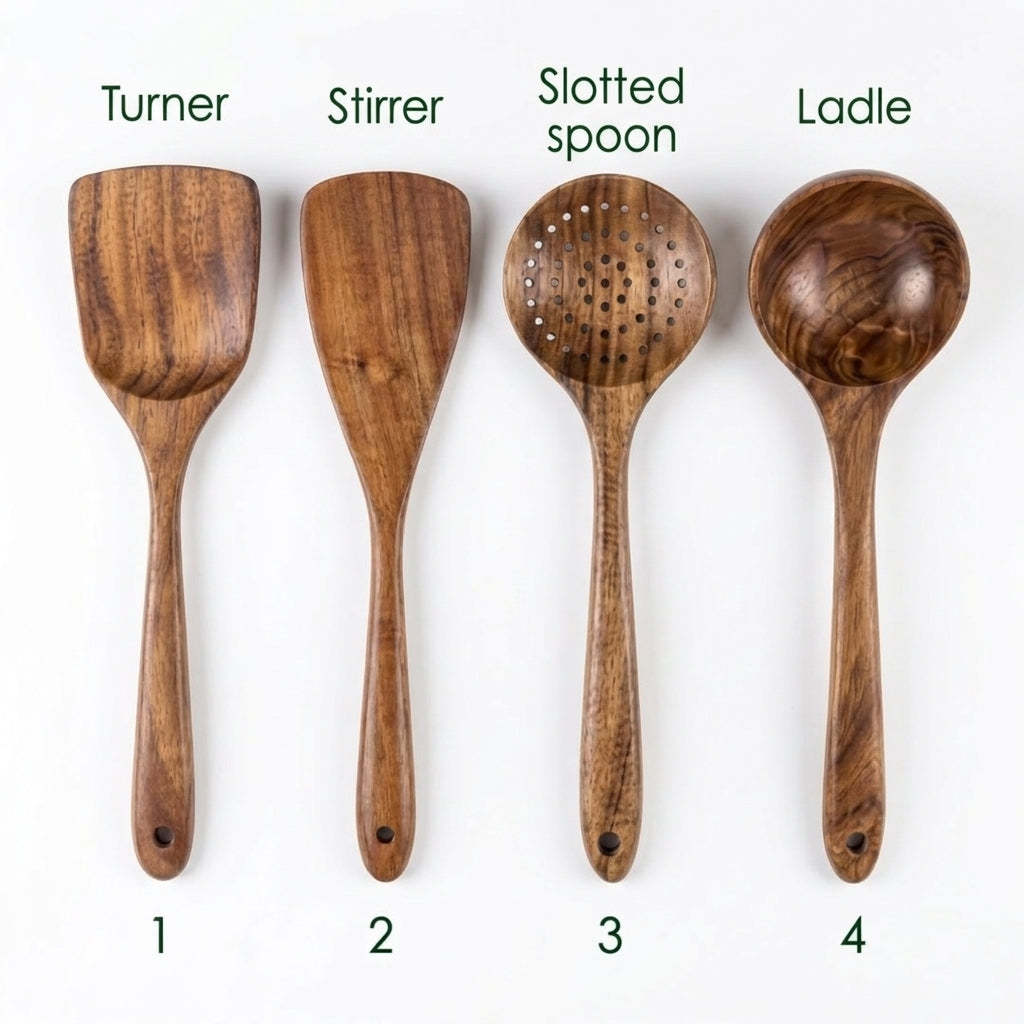
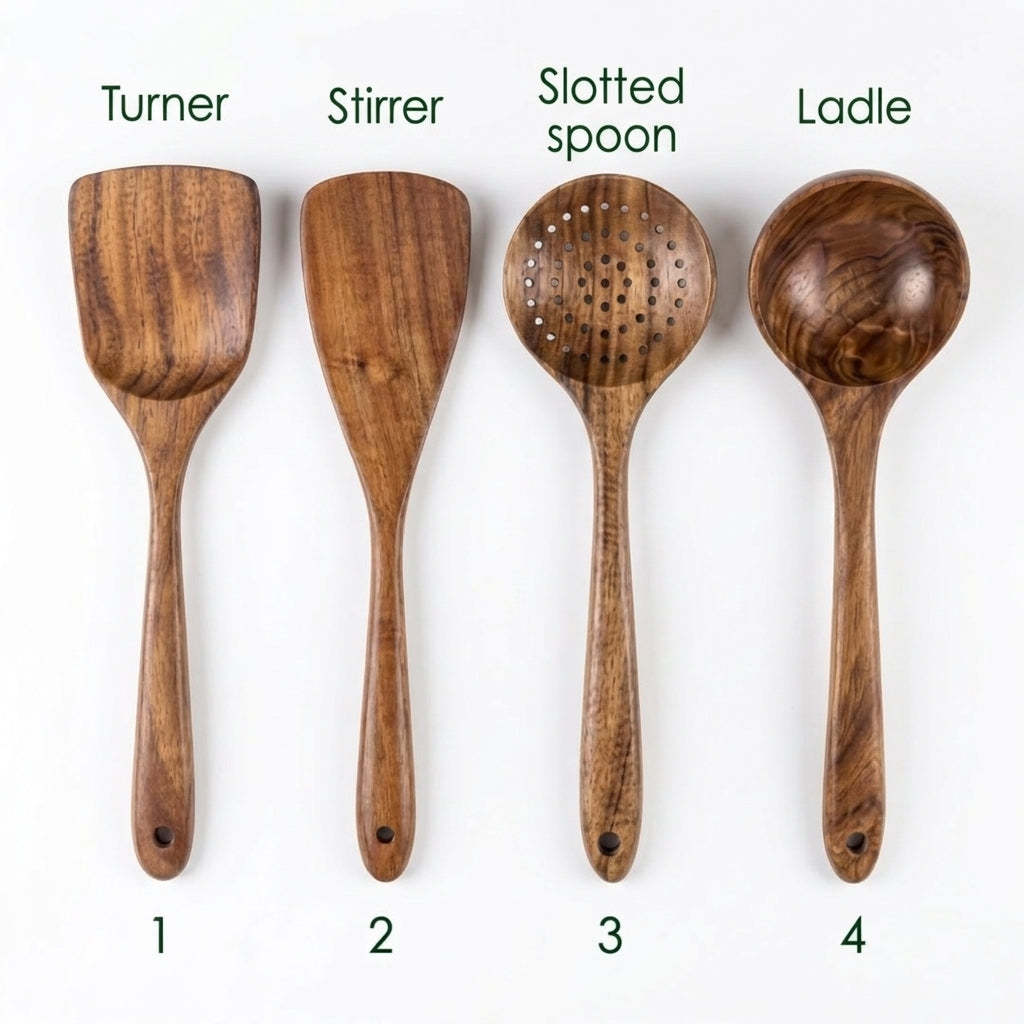
A turner, stirrer, slotted spoon and ladle. A focused choice if you want to try wood in a few everyday tasks.
Explore the starter set →Build your everyday routine.
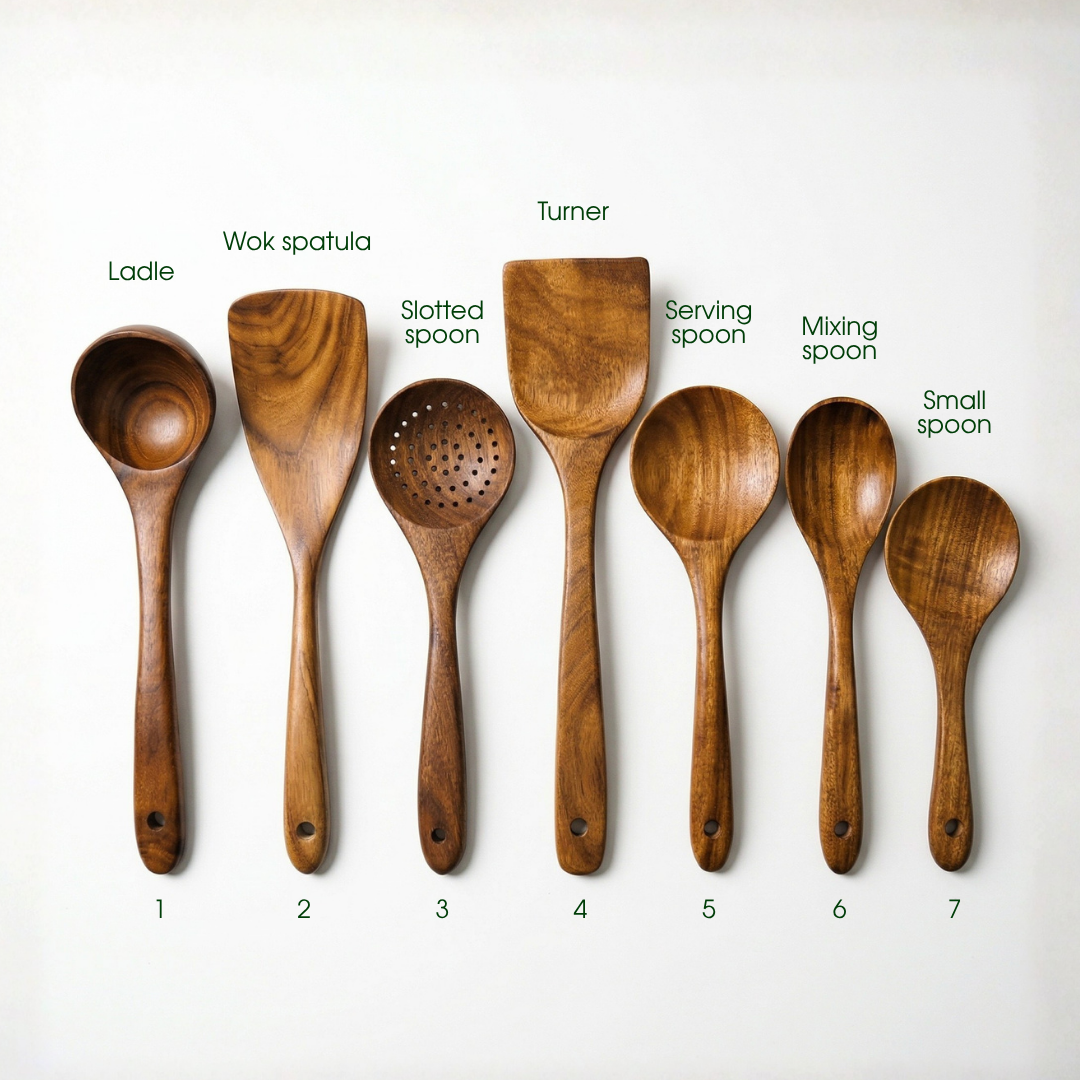
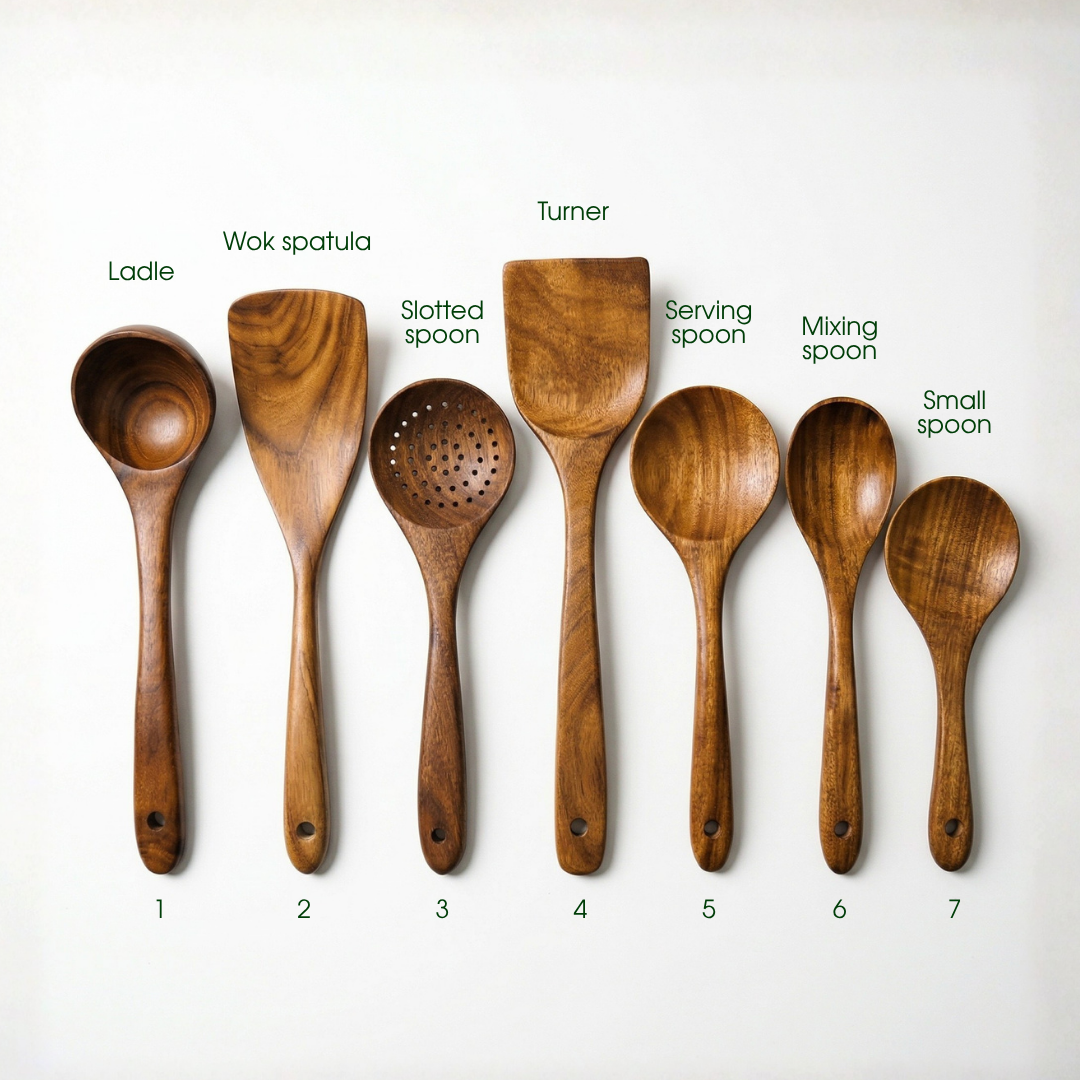
More wooden spoon and spatula shapes for mixing, stirring, turning and serving. A coordinated option for home cooks who want a broader selection.
Explore the everyday set →Bring more tasks together.
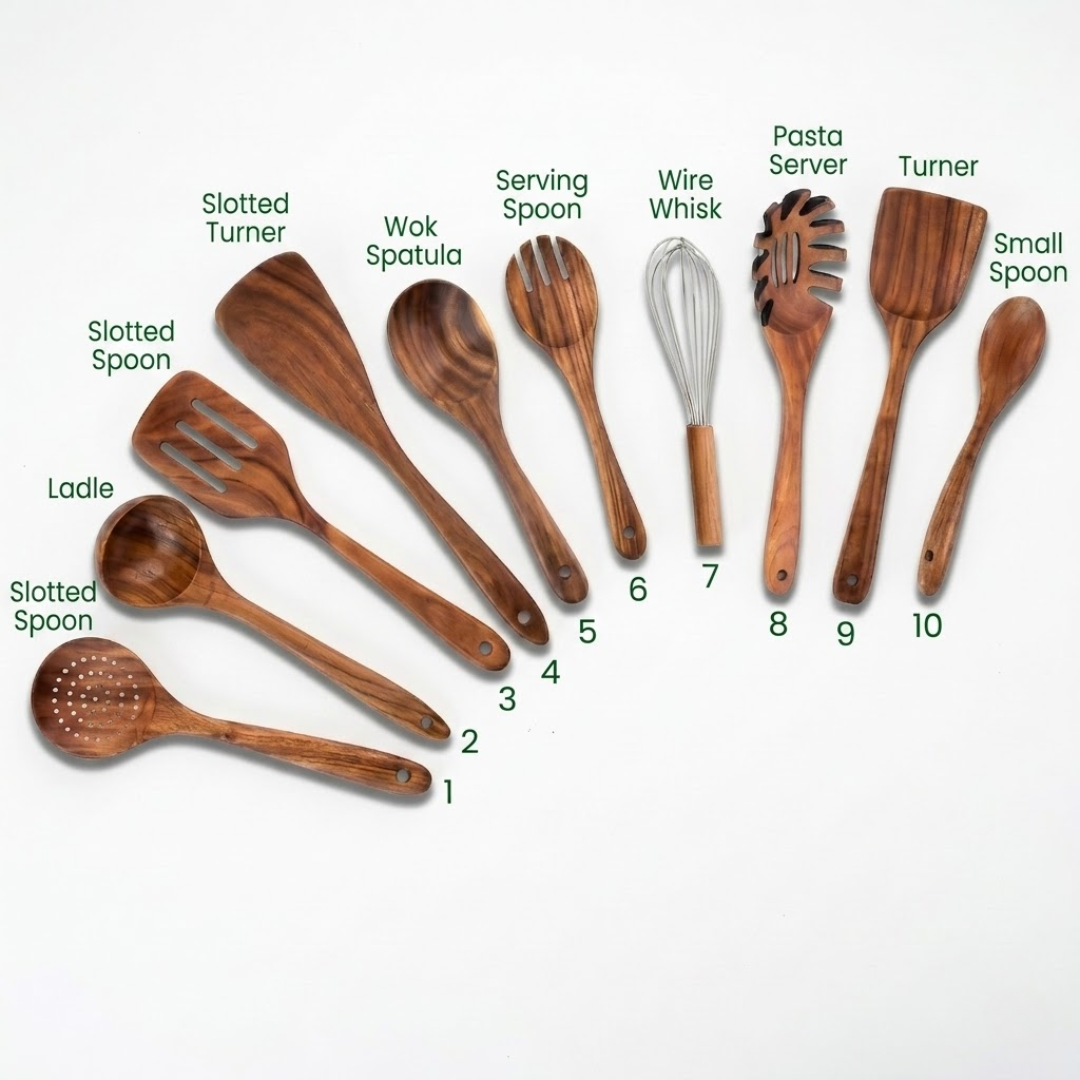
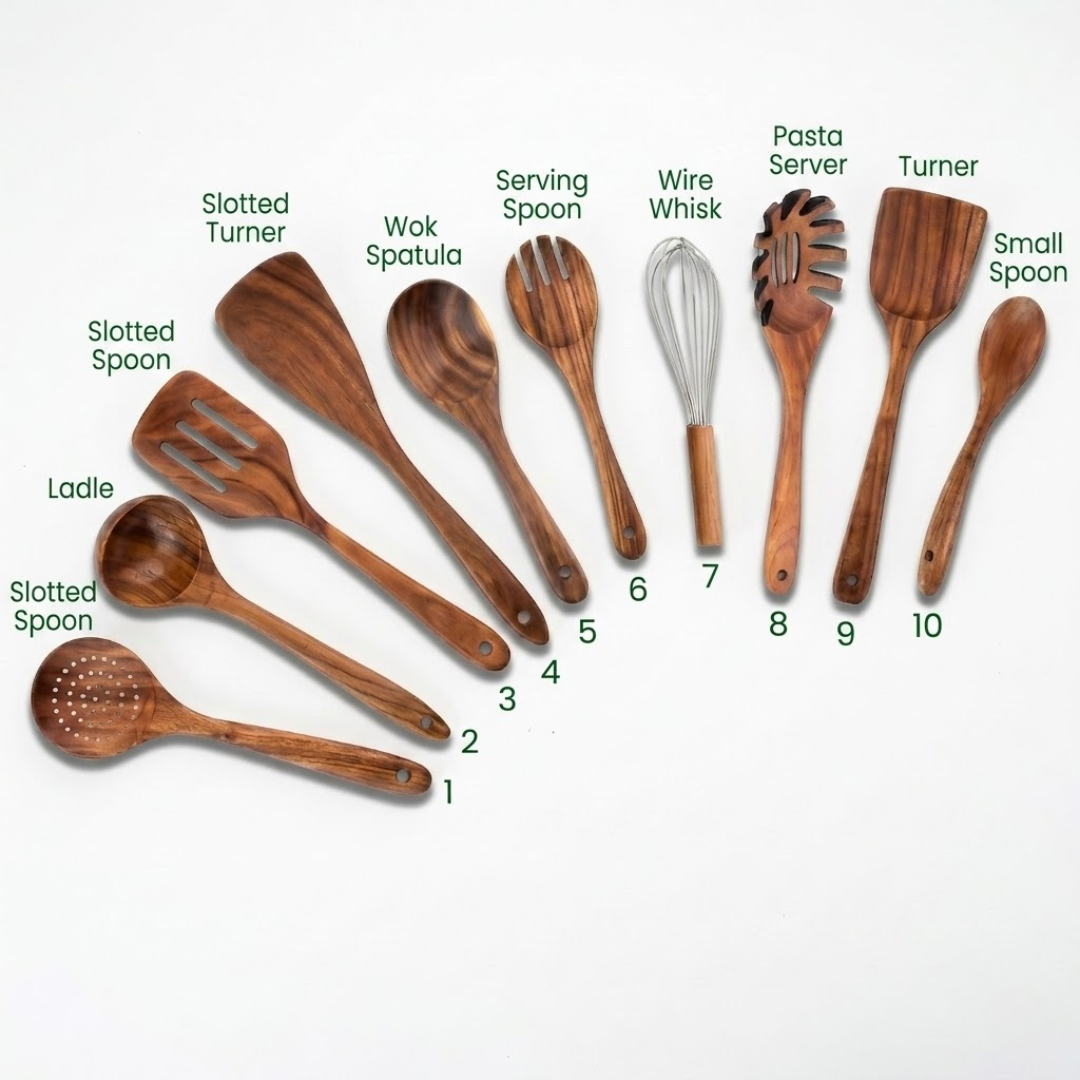
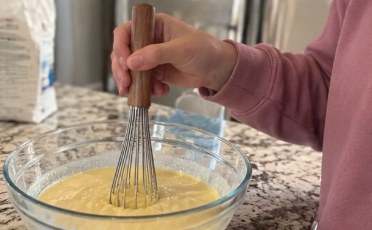
A wider collection that also includes specialist tools such as a wire whisk. Check the pictured contents to choose what you’ll actually use.
Explore the full collection →Review the selected set and its pictured contents on the product page before ordering. The 10-piece collection includes a metal wire whisk.
Less plastic in the drawer. More natural character on the counter. One collection, ready for the daily routine.
What would you replace first—the spoon in the simmering sauce, the turner beside the pan, or the mismatched tools on the counter? Choose the collection that answers a real need in your kitchen, then put it to work at your next meal.
Wood needs attention. Follow the supplied care instructions; generally, hand-wash, dry promptly and avoid prolonged soaking. Check for cracks, splinters or worn finishes before use.
Some kitchen purchases wait for an occasion. This one meets you at dinner.
A new recipe can wait for the weekend. A better-organized utensil crock can start with tonight’s meal.
If natural wood, a coordinated countertop and fewer plastic cooking tools sound like your kind of kitchen, this is a simple place to start.